

Flying Officer EUGENE QUIMBY TOBIN - From Hollywood to the Battle of Britain

- Rank
- Flying Officer
- Name
- EUGENE QUIMBY TOBIN
- Regiment
- Royal Air Force
- Date of Death
- Died 07 September 1941
In the summer of 1940, Eugene “Red” Tobin was flying a Spitfire in the skies over Britain. Little more than a year earlier, he had been working at MGM Studios in California, helping to pay for the flying lessons that would eventually take him to war.
Eugene Quimby Tobin was born in Salt Lake City, Utah, on 4 January 1917, and later grew up in Los Angeles. He attended Hollywood High School and developed an early passion for flying. While working as a messenger and guide at MGM Studios in Culver City, he used his earnings to help fund flying lessons and became a qualified civilian pilot.
When the Second World War began in Europe in September 1939, the United States remained neutral. Eugene, however, wanted to fly. He initially joined a group of American pilots intending to travel to Finland during the Winter War. By the time they reached Europe, the fighting there was coming to an end. Eugene and two fellow Americans, Andrew Mamedoff and Vernon “Shorty” Keough, instead travelled to France in the hope of flying for the French Air Force. Their plans were overtaken by the German invasion of May 1940.
As France collapsed, the three Americans made their way south through the country and eventually escaped by ship from St-Jean-de-Luz to Britain. They had arrived in a country preparing for a battle that would decide its immediate future. The three men decided to join the Royal Air Force. For Americans, this was not a simple choice. The United States was still officially neutral, and citizens who entered the armed forces of a country at war risked serious legal consequences at home. Eugene nevertheless volunteered to fight.
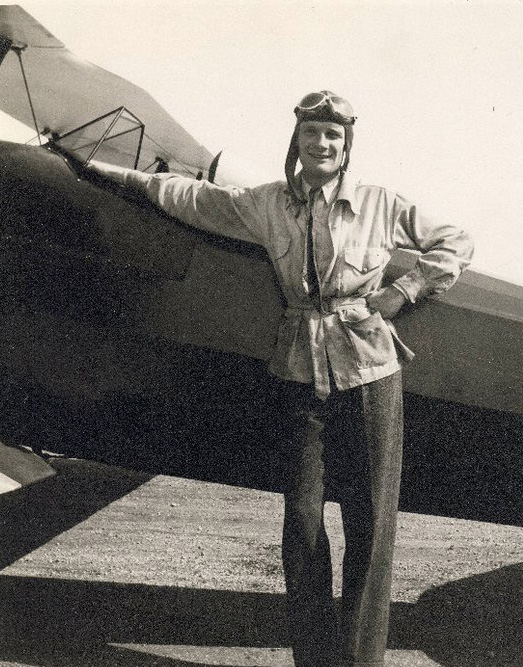
After training on the Spitfire, he joined No. 609 Squadron RAF at Middle Wallop on 8 August 1940, in the middle of the Battle of Britain. Eugene flew his first operational sortie on 16 August. During one of his early engagements, he was unable to get his oxygen supply working properly at high altitude and lost consciousness. He later recalled coming round when his Spitfire had fallen to around 1,000 feet. He managed to regain control and return safely.
Then, on 15 September 1940, Eugene took part in the day that would later become known as Battle of Britain Day. The Luftwaffe launched major attacks against London, while RAF Fighter Command sent its squadrons into the air to meet them. Eugene was among those pilots. During the fighting, he and another pilot attacked a Dornier Do 17 bomber which had become separated from its formation. Eugene was credited with a share in its destruction.
Later that month, Eugene, Andrew Mamedoff and Vernon Keough were chosen to join a new RAF unit: No. 71 Squadron. It became the first of the famous Eagle Squadrons, formed largely from Americans who had volunteered to fight before the United States entered the war. The three friends who had crossed France together became some of the squadron’s first pilots.
In October 1940, Eugene spoke about his experiences in a BBC broadcast. Reflecting on why the Americans had come, he put it simply: “We’re all on the same side and all fighting in the same cause.” For Eugene, Andrew and Vernon, that decision would have lasting consequences. No. 71 Squadron became operational in 1941, but the first of the three friends was soon lost. On 15 February, Vernon Keough disappeared while flying a convoy protection patrol over the North Sea. His aircraft and body were never recovered.
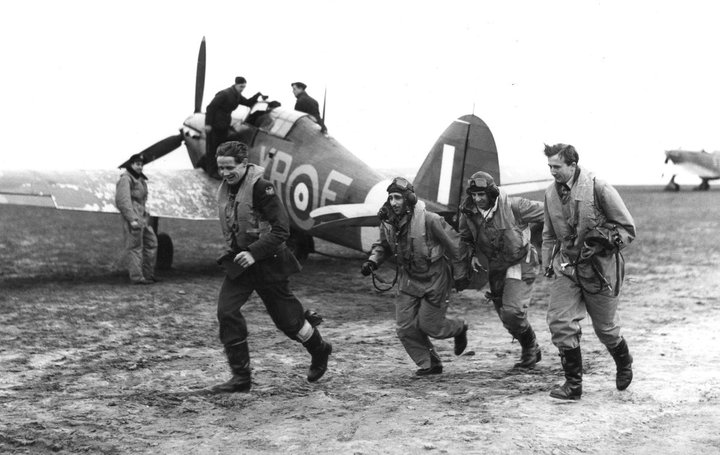
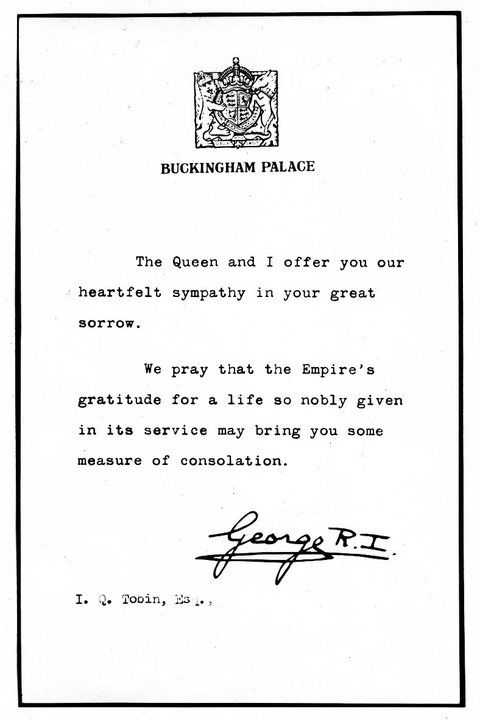
During 1941, the RAF increasingly moved from defending Britain to carrying the fight across the Channel. On 7 September, No. 71 Squadron took part in its first offensive fighter sweep over occupied France. Near Boulogne, the squadron encountered German Messerschmitt Bf 109 fighters. In the combat that followed, three Spitfires were shot down. Eugene’s aircraft crashed near Boulogne and he was killed. He was only 24 years old.
In the space of less than two years, Eugene had left California as a civilian pilot, crossed the Atlantic while his country remained neutral, escaped from France as German forces advanced, fought in the Battle of Britain and helped establish the first Eagle Squadron. He died exactly three months before the attack on Pearl Harbor brought the United States into the Second World War.
His friend Andrew Mamedoff survived him by only a few weeks. On 8 October 1941, Andrew was killed when his aircraft crashed in poor weather on the Isle of Man. None of the three Americans who had travelled through France together and helped form the first Eagle Squadron lived to see their own country enter the war. Vernon Keough, whose body was never recovered, is commemorated on the Runnymede Memorial in Surrey. Andrew Mamedoff is buried at Brookwood Military Cemetery. Eugene Tobin lies in Boulogne Eastern Cemetery in France, in Plot 13, Row A, Grave 10. The inscription chosen by Eugene’s family reads: “ETERNAL REST GRANT UNTO HIM, O LORD; AND LET PERPETUAL LIGHT SHINE UPON HIM”
The Eagle Squadrons continued after his death. Following the United States’ entry into the war, their American pilots were eventually transferred from the RAF into the United States Army Air Forces. They helped form the 4th Fighter Group, which would go on to become one of the most successful American fighter groups of the war in Europe.
Loading map…

Support the Foundation
By donating to our Charitable Foundation you help us deliver projects like For Evermore, which educate and inspire future generations to remember those who gave their lives in the two World Wars. With your support, we can keep their stories alive and ensure they are never forgotten