

Pilot Officer GEORGE TEICHEIRA - An American Eagle
02/09/2026

- Rank
- Pilot Officer
- Name
- GEORGE TEICHEIRA
- Regiment
- Royal Air Force Volunteer Reserve
- Date of Death
- Died 01 June 1942
Early Life
George Teicheira had wanted to fly since he was a boy.
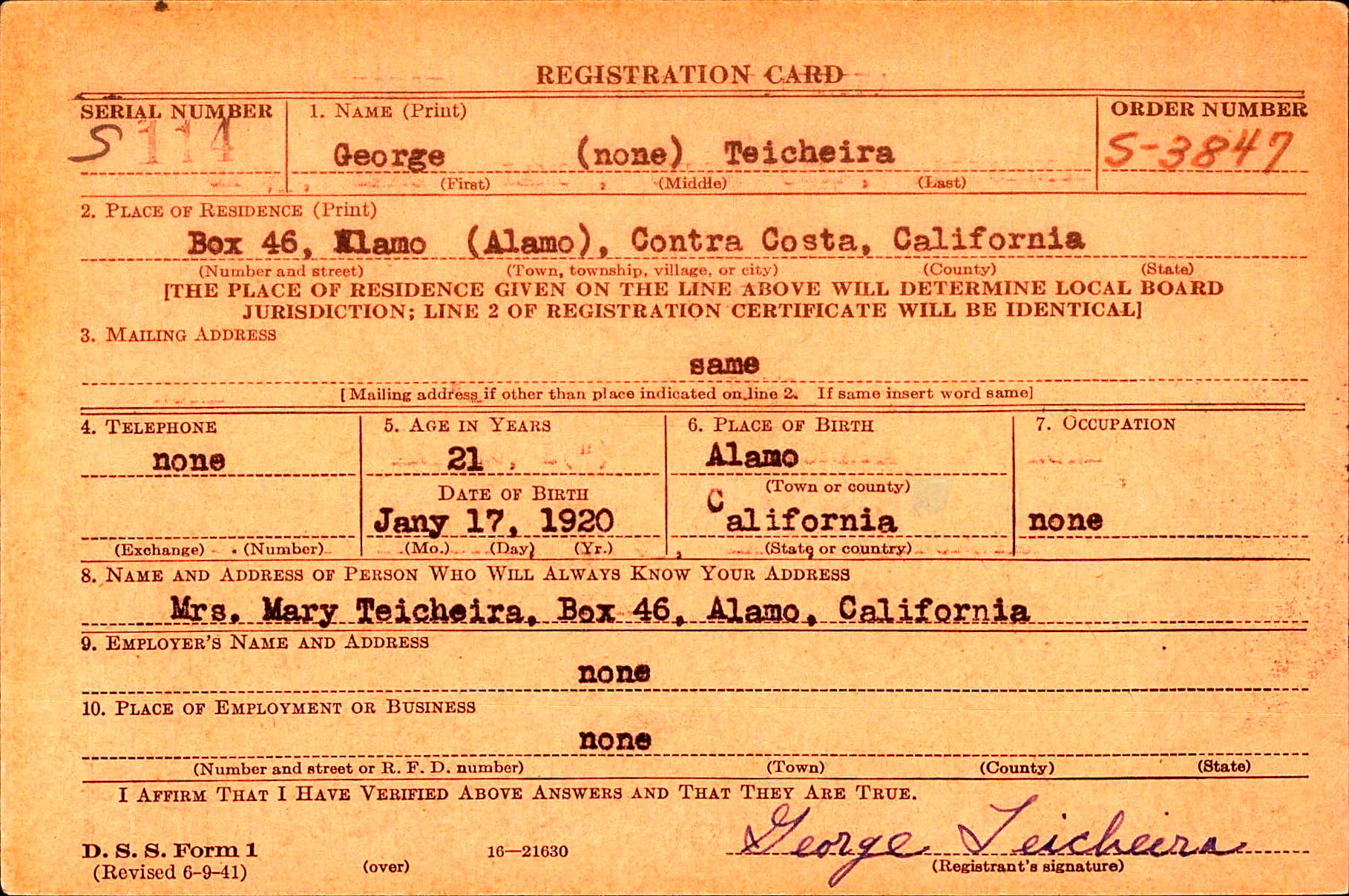
He was born George Teixeira in Alamo, California, on 17 January 1920. His parents, John and Mary, were from a proud Portuguese-American community, and George was one of eleven children. During his school years, the family changed the spelling of their name to Teicheira so that English speakers would find it easier to pronounce.
George did not come from a wealthy background. At the age of 18, he was working at a local golf course. Yet he saved what he could and paid for short flying lessons at a small airfield near his home. Even then, he was determined to become a pilot.
The Choice to Serve
When the Battle of Britain began in 1940, the United States had not yet entered the Second World War. Britain and its allies were fighting alone against Nazi Germany. George decided that he could not simply watch from California. He wanted to help defend the freedoms he valued. It was a bold choice for someone still in his early twenties: he would leave his large family, travel thousands of miles and join the armed forces of another country.
George first trained at Hayward Aerodrome in California. In July 1941, he joined Squadron 11 of the Polaris Flight Academy’s British Refresher Training Programme at War Eagle Field. The course prepared American pilots who hoped to serve with the Royal Air Force. He trained there for several months, flying a range of different aircraft. Five of the eleven men on George’s course would later serve in the RAF’s Eagle Squadrons.
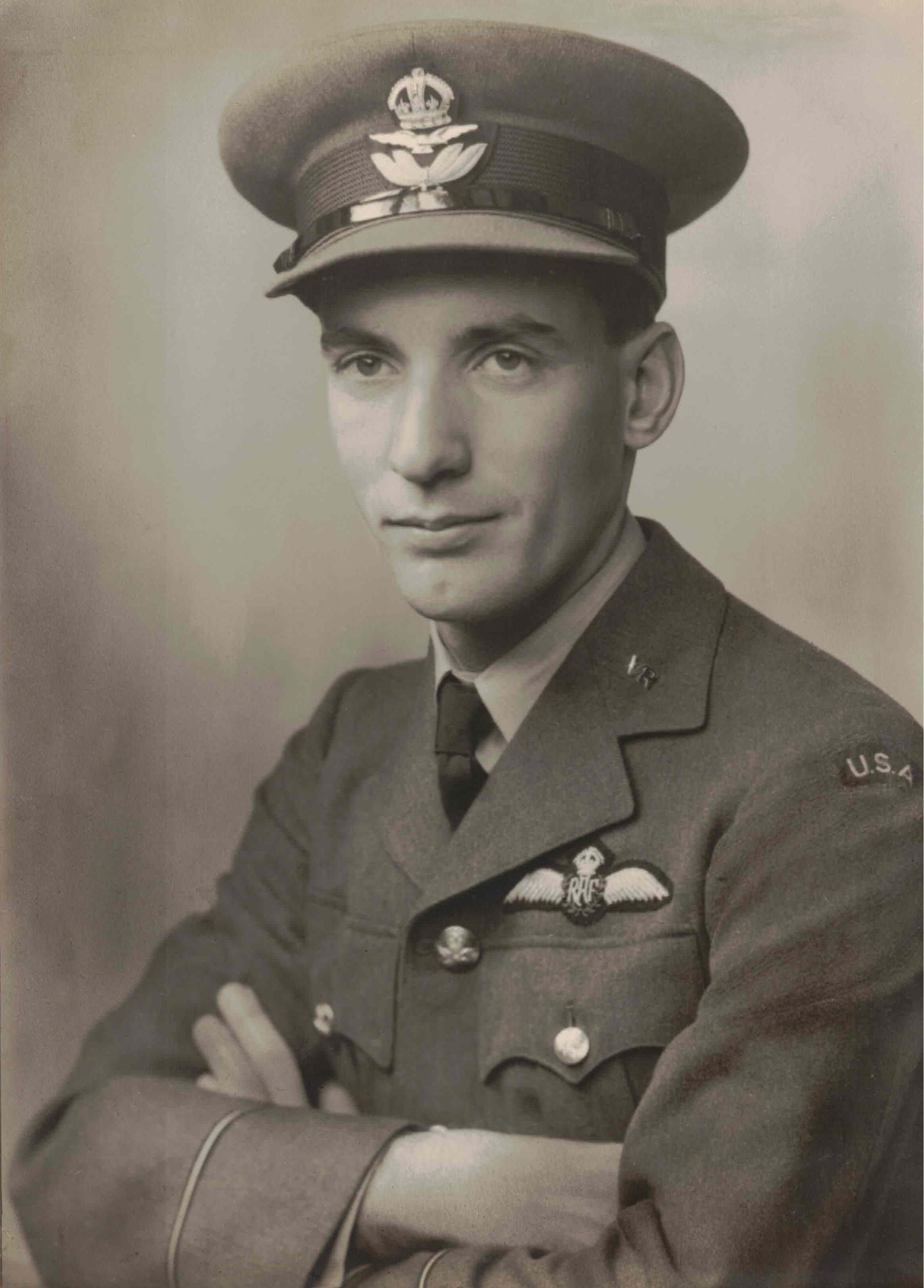
After completing his training in November, George travelled to Canada and joined the Royal Air Force Volunteer Reserve. He was commissioned as a Pilot Officer on 20 November 1941. Within weeks, he was on his way to Britain.
Becoming an Eagle
George arrived in Britain in December 1941, around the same time that the attack on Pearl Harbor brought the United States into the war.
He joined No. 71 Squadron, the first of three RAF Eagle Squadrons formed mainly from American volunteers. These men had crossed the border into Canada or travelled overseas so that they could fight before their own country entered the war.
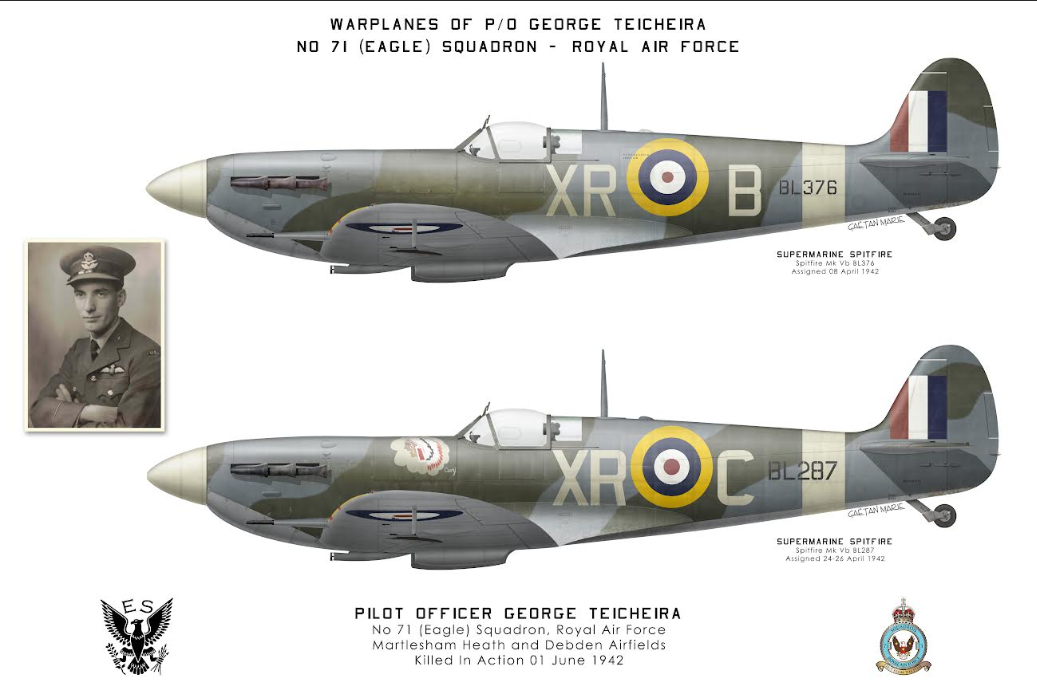
George trained at RAF Martlesham Heath and RAF Debden. He first learnt to handle the powerful Hawker Hurricane before moving on to the Supermarine Spitfire.
By April 1942, he was ready for combat. Family research shows that George flew 31 missions during that month. These included patrols and escorting bombers across the English Channel. He flew another nine missions during May.
Every flight carried danger. German fighters could appear with little warning, and a pilot who came down over the Channel had only a small chance of being found. Still, George continued to fly.
His final flight
On 1 June 1942, George took off in a Spitfire with No. 71 Squadron. He was taking part in a fighter sweep over occupied Europe, with the squadron returning from the area around Bruges in Belgium. During the fighting, George’s aircraft came under attack from German Focke-Wulf Fw 190 fighters.
Members of his squadron later reported seeing several enemy aircraft behind him. Smoke was pouring from his Spitfire as it made a long turn towards the English Channel. George was not seen again. No parachute was spotted. Searches found no trace of him or his aircraft. George was officially reported missing and later presumed killed.
He was only 22 years old.
Back in California, George’s family waited for news. A story passed down through the family tells that, on the day George died, his mother awoke screaming. She said that George had appeared in a dream to tell her goodbye. Several days later, the official message arrived. The date of his disappearance was the same.
George’s loss remained with his family for the rest of their lives. His older brother Joseph also became a pilot, flying dive bombers in the Pacific. His younger brother Louis later joined the United States Navy and served on Midway. Louis was always proud of George, although the pain of losing him made his story difficult to speak about.
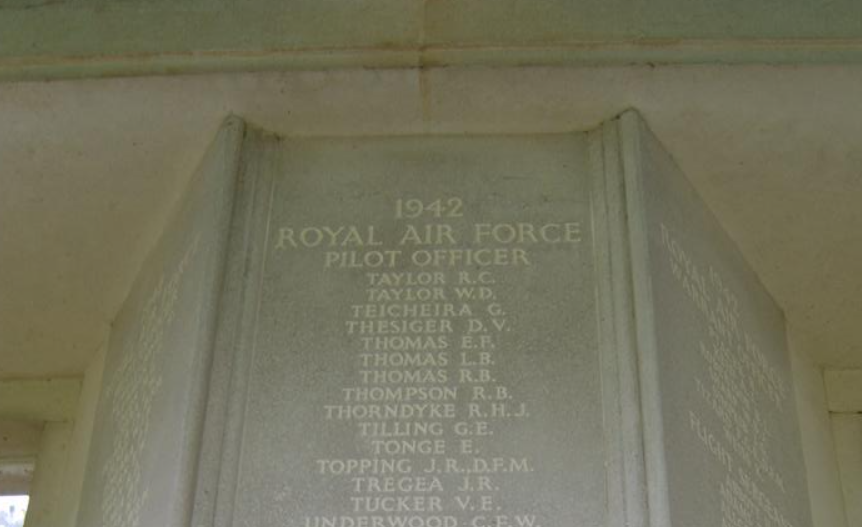
George has no known grave. His name appears on Panel 72 of the Runnymede Memorial, which commemorates airmen and airwomen who died during the Second World War and have no known grave.
He is also remembered on the Eagle Squadrons Memorial in Grosvenor Square and in the Books of Remembrance at St Clement Danes, the RAF’s church in London.
Story based on research and family memories shared by George’s great-nephew, Michael Teicheira.
Loading map…

Support the Foundation
By donating to our Charitable Foundation you help us deliver projects like For Evermore, which educate and inspire future generations to remember those who gave their lives in the two World Wars. With your support, we can keep their stories alive and ensure they are never forgotten