

SERJEANT SAMUEL BRUNYEE WELLS 8843, 2nd BN., YORK AND LANCASTER REGIMENT

- Rank
- Serjeant
- Name
- S B WELLS
- Regiment
- York and Lancaster Regiment
- Date of Death
- Died 12 April 1917
One of twelve children, Samuel was born in Warmsworth, on the western edge of Doncaster, on the 19th of December 1889. His parents William and Jane Elizabeth lived for many years in Urban Road with William employed variously as a lime burner, greengrocer and fish hawker.
In December 1906, Samuel joined the Reserve Battalion of the York and Lancaster Regiment. His age was given as seventeen years and he had been working for the Brodsworth Main Colliery Company as a brass finisher. He was described as having a fresh complexion, brown eyes and dark brown hair. He weighed just over 7 stone and was 5’ 3½” tall.
Eight months later he transferred to the regular army, again with the York and Lancaster Regiment, signing up for 7 years active service and 5 years on the Reserve. Serving in the Regiment’s 2nd Battalion. Parental consent had to be obtained as he was underage at the time. He managed to be promoted to Lance Corporal in June 1913.
It is not possible to say when Samuel returned to civilian life but he had certainly left the Army by early July 1913 as he joined the Doncaster No.3 Branch of the National Union of Railwaymen employed as a labourer. He began working at the Loco Works, part of the Great Northern Railway's main engineering works in the town, known as the Plant, on a wage of 3s 6d per week which had risen to 4s 6d per week by the time he was recalled to the Colours.
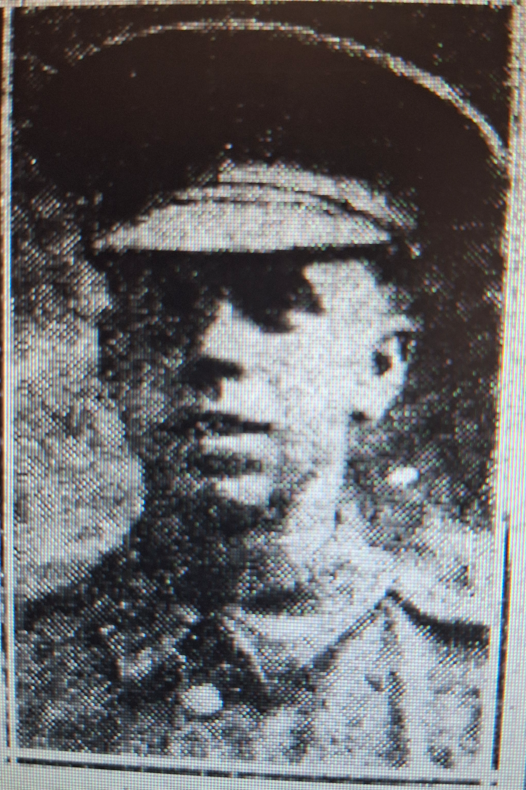
As a Reservist, this would have been as soon as war was declared and very soon after putting on the uniform again, he was tried and convicted by a Military Tribunal for refusing to obey an order for which he was reduced to the ranks. Perhaps frustration at not having much time to enjoy his civilian life?
During his spell in the peace time army, Samuel had never served abroad. However, it was not long before he did finally arrive on foreign soil, landing at St Nazaire on September 9th 1914. He regained the rank of Lance Corporal on an unpaid basis in July 1915.
On September 14th 1915, whilst home on leave, Samuel married Catherine Whitley at St Jude’s Church in Hexthorpe. There were no children born to the marriage and the couple lived with her parents at 2 Travis’s Yard, Hexthorpe Road.
Further promotions followed for Samuel, to full Corporal in January 1916, to Lance-Sergeant in May that year and to full Sergeant in September 1916, being placed in the Signal Section.
According to a report in the Doncaster Chronicle, soon after his marriage in 1915: “he was commended by his General for distinguishing himself in laying telephone wires up to the front trenches under heavy fire”.
The 2nd Y&L were part of 6th Division and took part in the successful attack at Morval during the Somme campaign in September 1916, but by the date of Samuel’s death, they were in the Loos area of northern France.
The war diary entry (edited) for the day of his death reads thus:
“Quiet day. At 10pm, the battalion carried out a raid on enemy trenches on the north-west face of The Triangle. Party consisted of 2 officers and 80 other ranks. The object of the raid was to enter the German front line and penetrate to {specified} trenches, obtain identifications, destroy 4 tunnels, destroy dugouts and do as much damage as possible”.
“The raid was successful. 16 Germans were killed, including one officer, several dugouts destroyed and mine shafts blown in. No identifications were obtained, however, as the time was very limited. The artillery barrage and bombardment was extremely good. Our casualties were slight”.
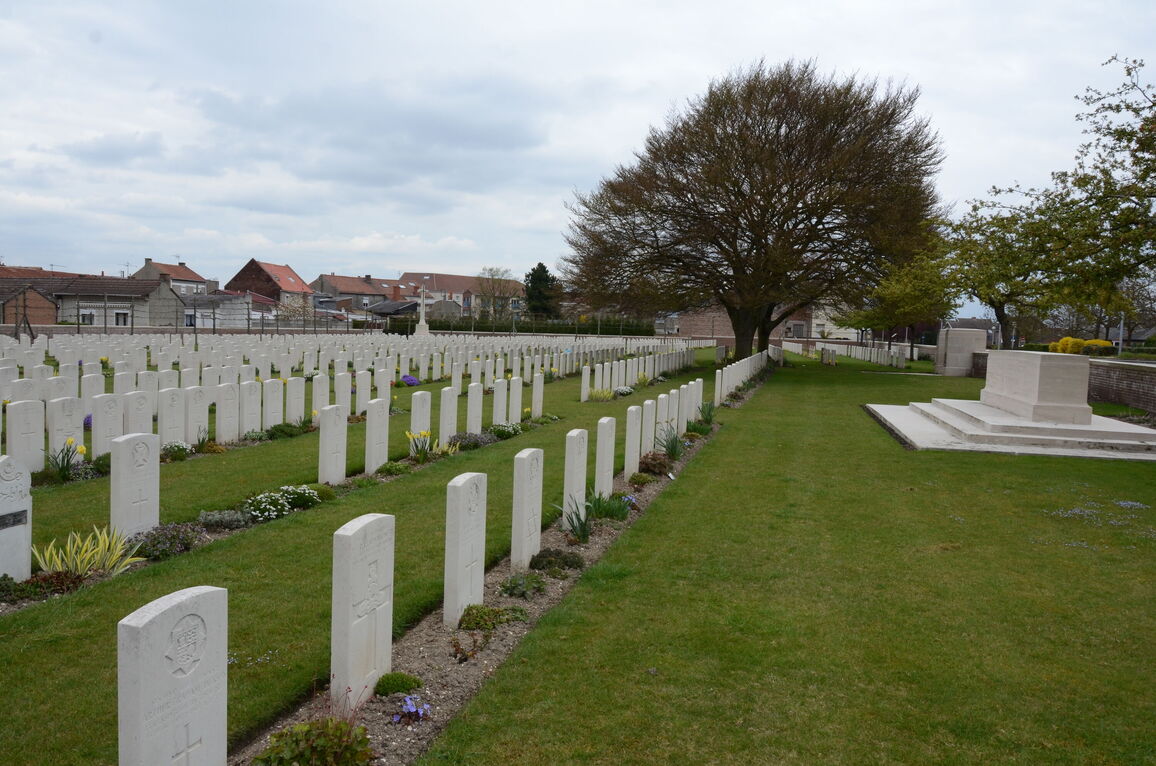
Those “light casualties” resulted in 5 men from the battalion being killed, of which Samuel was one, and an unknown number wounded or perhaps missing. One of the dead is remembered on the Loos Memorial whilst Samuel and three others are buried in Maroc British Cemetery, Grenay, about 9 miles south east of Bethune.
The Chronicle’s report mentioned above goes on to say:
“It is a sad coincidence that the work then done so gallantly is the work that led to his death. The Regimental Sergeant Major writes to say that he was killed by shellfire whilst mending wires. He says that Signaller Sergt. Wells will be a great deal missed. The poor fellow was buried behind the lines the day after his death”.
“Mrs Wells has received another letter from a signaller and from this it appears that the sergeant and a lance corporal were instantaneously killed together by the same shell."
“It came as a great shock to me as Sammy was my best friend in the regiment. The sorrow one feels is more acute when the fallen one is a personal friend”.
He adds that it is very hard that a soldier should meet his death after being out two years and a half but he closes with these comforting words:
“I must say that poor Sam died a hero. He was both brave and fearless””.
His personal effects were returned home to Catherine and included letters, photos, cards, pocket and religious books, a signals instruction certificate, wallet, a tin box with three cigarettes, pencil, gloves and a handkerchief.
Catherine was awarded a Widow’s Pension of 16s 3d per week and she also received his back pay of £34 16s 1d and the War Gratuity of £18 10s. She remarried in early 1920 and would go on to have two sons.
Samuel was awarded the 1914 Star, the British War Medal and the Victory Medal.
Loading map…

Support the Foundation
By donating to our Charitable Foundation you help us deliver projects like For Evermore, which educate and inspire future generations to remember those who gave their lives in the two World Wars. With your support, we can keep their stories alive and ensure they are never forgotten