

05 October 2026
A Visitor’s Guide to Photographing CWGC Cemeteries and Memorials
Many of our visitors take photographs when visiting CWGC cemeteries and memorials.
Photos help preserve the memory of a visit, record names, support family research and share the experience with someone who cannot be there.
We’re always delighted to see photographs our visitors take. This guide explains how to take photographs with care, from planning your visit to sharing your images responsibly.
At a Glance: What This Page Covers
Whether you're visiting a CWGC cemetery or memorial for family history research, travel, education, photography or commemoration, this guide will help you plan your visit and take meaningful photographs with confidence. It covers everything from finding a name before you travel to sharing your images responsibly online.
Plan your photography visit by researching the cemetery or memorial, checking site information and thinking about the photographs you want to take.
Find a casualty's name before you go using CWGC records and location details to identify the correct headstone or memorial panel.
Learn what to photograph at a grave or memorial, including names, inscriptions, surrounding features and wider context.
Discover practical techniques for taking clear, readable photographs of headstone inscriptions and memorial names.
Explore ways to photograph landscapes, horticulture, architecture and the distinctive character of CWGC sites.
Understand how to photograph respectfully and be considerate of other visitors using shared spaces for remembrance and reflection.
Learn how to share photographs online responsibly by adding accurate context, checking details and maintaining a respectful tone.
Connect your photographs back to CWGC records and site information to help preserve the stories behind the people and places you have visited.
Before You Visit: Plan the Photograph You Want to Take

While our cemeteries and memorials around the world share many common features, each site is unique, either because of architectural or horticultural design choices, because of its position in the landscape, or because of the stories of the men and women commemorated there.
When visiting a site to take photographs, a little planning will go a long way to helping you achieve the photograph you want to take.
Find the cemetery or memorial
The first step is the simplest: find the location of the site you want to visit. You can use our Find Cemetery and Memorial feature on our website to find a site.
You might have somewhere specific in mind, or just curious to see what’s nearby.
By searching via our website, you’ll find information about all of our sites, including the location of the site, visiting directions, the size of the site and some information about what you’ll find there, all of which will help you plan your photography.
Search for a name before you go
If it’s your first time visiting a CWGC cemetery or memorial, and you’re looking to visit and photograph a specific name, you’ll want to look up the name of your casualty in our casualty database.
Use our Find War Dead tool to search for the person you want to find, simply enter the name and any additional information you have, including date of birth, service number, rank or regiment.
Each casualty has their own individual page on our website and will have information to tell you where they’re commemorated in the cemetery or on the memorial; you’ll usually see the headstone row and number or panel number, depending on the type of site you’re planning on visiting.
Read our guide on planning a visit to a CWGC cemetery or memorial.
Check access and site details
Many of our larger cemeteries and memorials are owned and operated by the CWGC and are open to the public year-round. However, we also care for plots and individual burials in larger civil cemeteries, churchyards and burial grounds.
Sometimes access to these sites can be limited by the operators of these sites – we endeavour to note this visiting information on our website, but if in doubt, you can also contact these sites directly to confirm the best time to visit.
Think about the story you want to tell
Now that you’ve learned about the site you want to visit and discovered the locations of the names you’d like to record, consider the kinds of photographs you’d like to take, as this could influence the kit that you’re taking with you and even the time of day you should visit.
If you’re going simply to record a name or two in a particular site, then a simple set up or camera phone will be perfect – although if you think the particular name you’re interested in is high on a memorial panel, then you might consider a selfie stick or similar for that additional reach.
If you’re planning a more comprehensive photography session focussed on architecture or a site’s position in the landscape, then think about the types of lenses you might need, a tripod for long exposure shots, or maybe a flash system. You should also consider how much kit you want to be carrying with you, as some of our sites are a short walk from the nearest suitable parking spot.
You should also consider the season and time of day that you’re visiting. On a sunny day, think about where the sun will be during your visit, or even time you trip to coincide with golden hour.

Want more stories like this delivered directly to your inbox? Sign up for our newsletter for regular updates on the work of Commonwealth War Graves, blogs, event news, and more.
Sign UpWhat to Photograph at a CWGC Cemetery or Memorial
Your natural inclination when visiting a CWGC cemetery or memorial will be to take a standard wide shot. These kinds of photographs are great for setting the scene, showing the scale of one of our cemeteries or memorials, and giving a taste of the atmosphere of the site.
Here are some suggestions for other photographs you can take while visiting a site to better share your experience, and some top tips to turn good photographs into great ones.
Names and inscriptions
Most visitors to our cemeteries and memorials will be looking to visit a particular name and will want to preserve that memory with a photograph.
When taking a photograph of a headstone, there are a couple of things to consider – you need to be able to read the inscription, and you want to include a little detail of its immediate surroundings. You should also do your best to avoid casting a shadow over your subject, just in case you inadvertently make it difficult to read the inscription.
Photographing headstones
Start by considering the angle that you’re approaching the headstone from. Our standard Commission headstones are designed to be read as you are standing in front of them or walking past, but changing your angle of view will result in a far stronger photograph.
Consider these two photographs of Private Corteil’s headstone. Both taken on mobile phones, one is taken almost straight on, the inscription is slightly out of focus, and there is very little information about the plot.
In the other, we’ve used a lower angle, slightly to one side. This wider image shows some of the gifts left by other visitors, shows the good weather that day, and includes some of the other headstones around him. Most importantly, the inscription is clear and legible.
Start by considering the angle that you’re approaching the headstone from.
Our standard Commission headstones are designed to be read as you are standing in front of them or walking past, but changing your angle of view will result in a far stronger photograph.
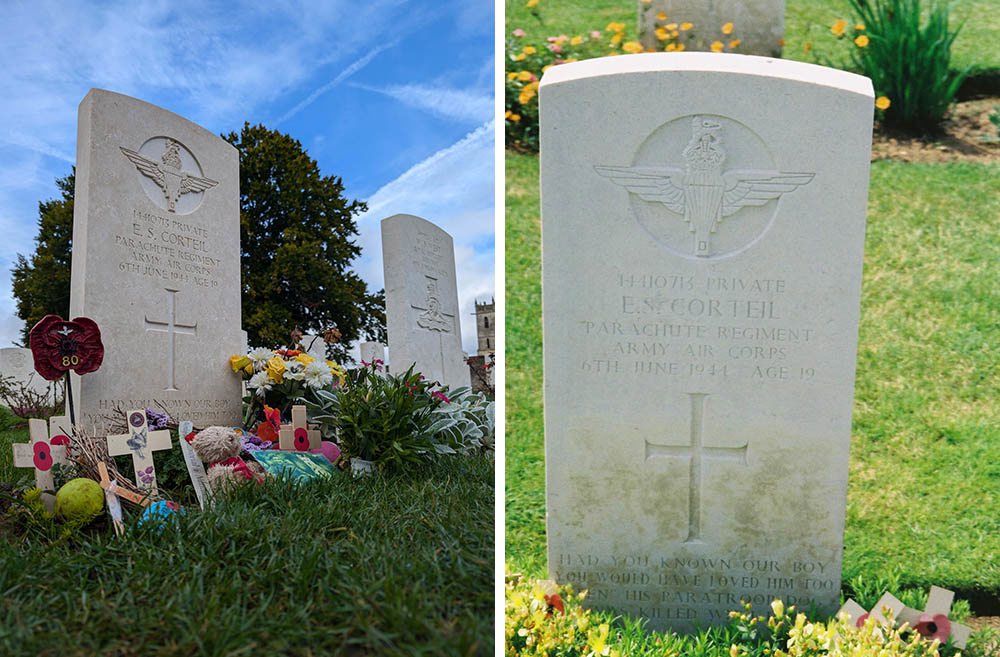
Consider these two photographs of Private Corteil’s headstone. Both taken on mobile phones, one is taken almost straight on, the inscription is slightly out of focus, and there is very little information about the plot.
In the other, we’ve used a lower angle, slightly to one side. This wider image shows some of the gifts left by other visitors, shows the good weather that day, and includes some of the other headstones around him. Most importantly, the inscription is clear and legible.
Photographing names on memorial panels
Taking a photograph of a name on a memorial panel can be tough. Picking a single name out of many is difficult, but you don’t want to zoom in and only capture one name, as this loses the scale and detail of the memorial itself.
In this photograph, we’ve isolated the name of Major Edward d'Albret Le Mottee on Loos Memorial. Again, we’ve approached from an angle, which preserves the inscription of his regiment at the top of the frame.
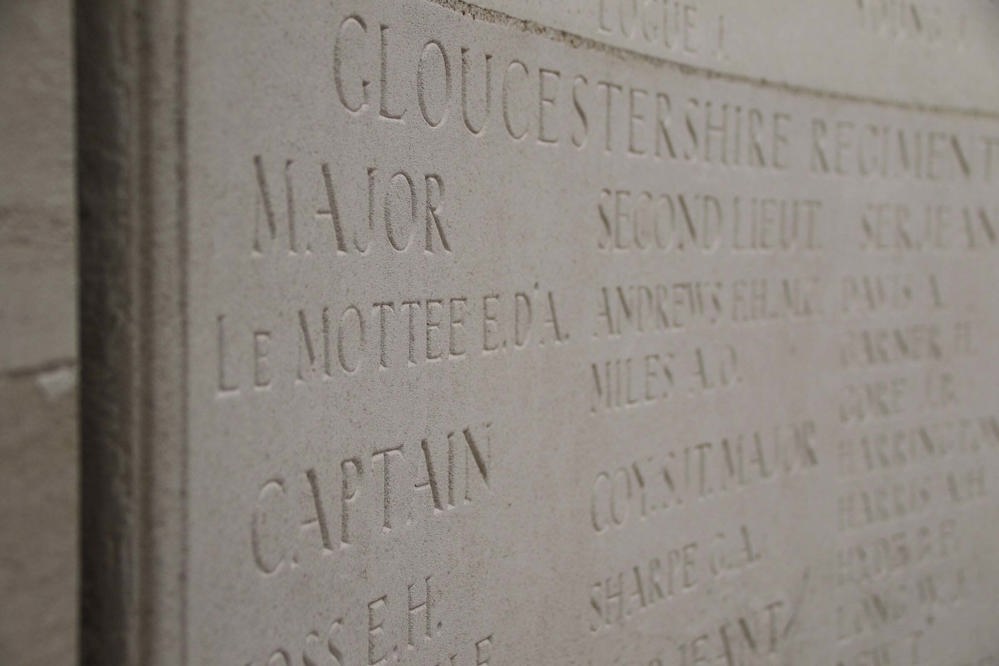
We’ve also used a shallow depth of field, achieved with a lens with a large aperture, which means that Major Le Mottee’s inscription stays sharp, while the rest of the inscriptions are less in-focus.
This ensures that the eye is drawn to the subject, while keeping the sense of scale of the memorial panel. Mobile users could use portrait mode to achieve a similar effect.
Landscapes and planting
The planting and horticulture in our sites play a vital role. As well as creating a pleasant environment for commemoration and reflection, it contributes to biodiversity and sustainability, helping us in our mission of care for the fallen of the two world wars.
Taking photographs of plants and flowers is a skillset in and of itself, but visitors to our sites will also want to consider the location and surroundings when taking photographs. Consider how you can use the architecture and physical features of the site to improve your photograph.
It is important to note that you should never move or damage any of the plants in our sites while trying to capture the perfect shot. We ask that all visitors respect our sites while visiting.
This photograph of some lovely Bearded Iris plants is a great example of horticultural photography within one of our sites.
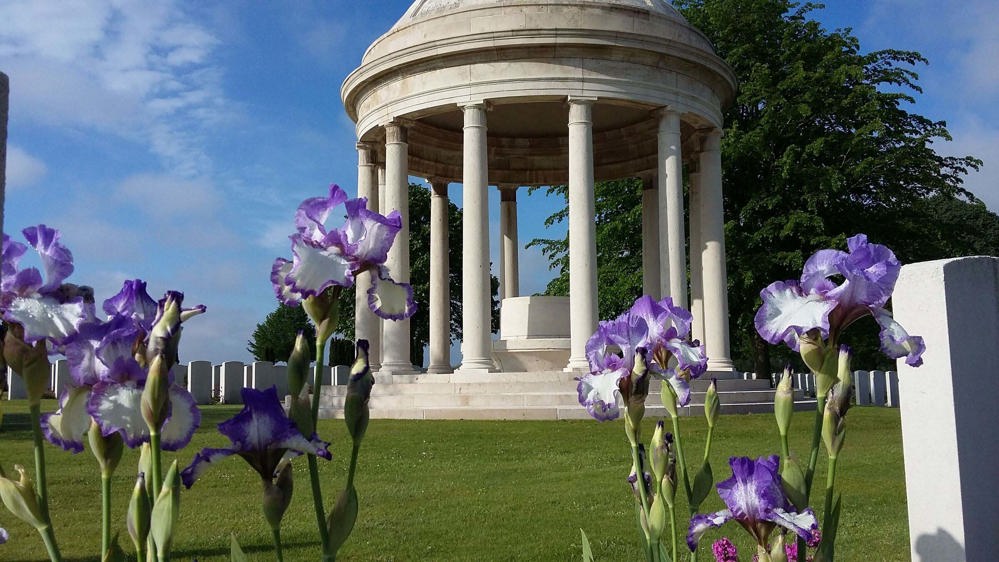
The flowers themselves are the focus of the image, capturing the distinct white and purple colouring, but including Beford House’s headstones and architecture in the background creates a scene that can only be created at a CWGC cemetery.
Architecture and site details
Incredible care, talent and passion go into designing a CWGC cemetery or memorial, and there are often an incredible number of details that contribute to a respectful environment and visitor experience.
When photographing each site, there are many ways to take breathtaking shots.
In this photograph of Etaples Military Cemetery, we’ve used a standard wide shot to capture the incredible entrance and Cross of Sacrifice, overlooking rows of our Commission headstones. This photo makes the design the main focus of the image, a real scene stealer.
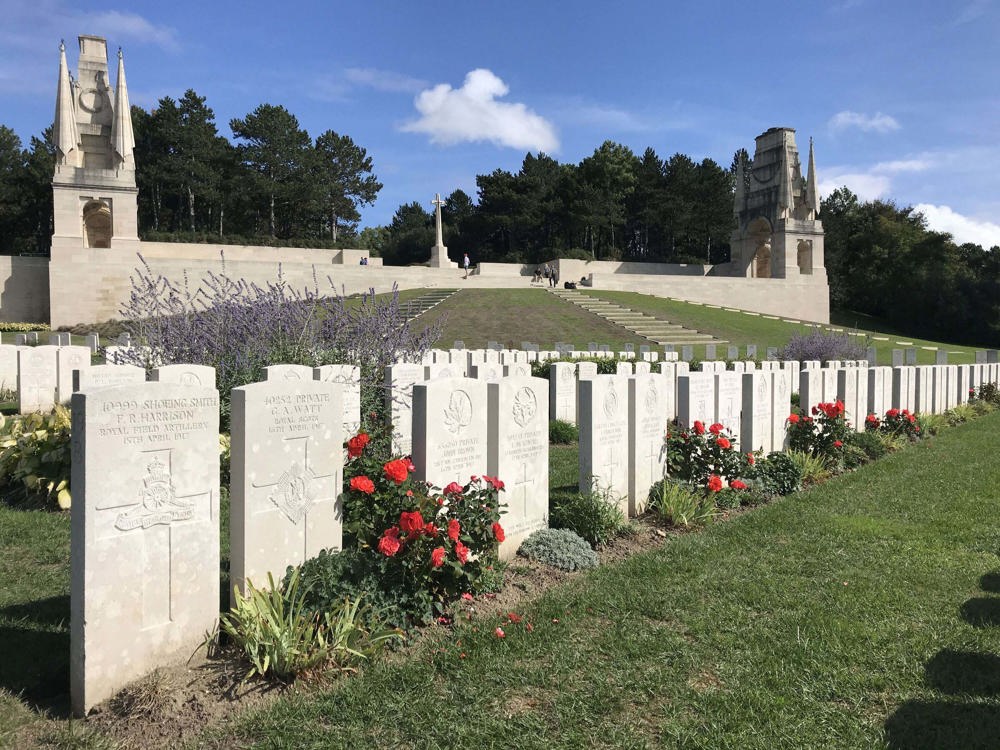
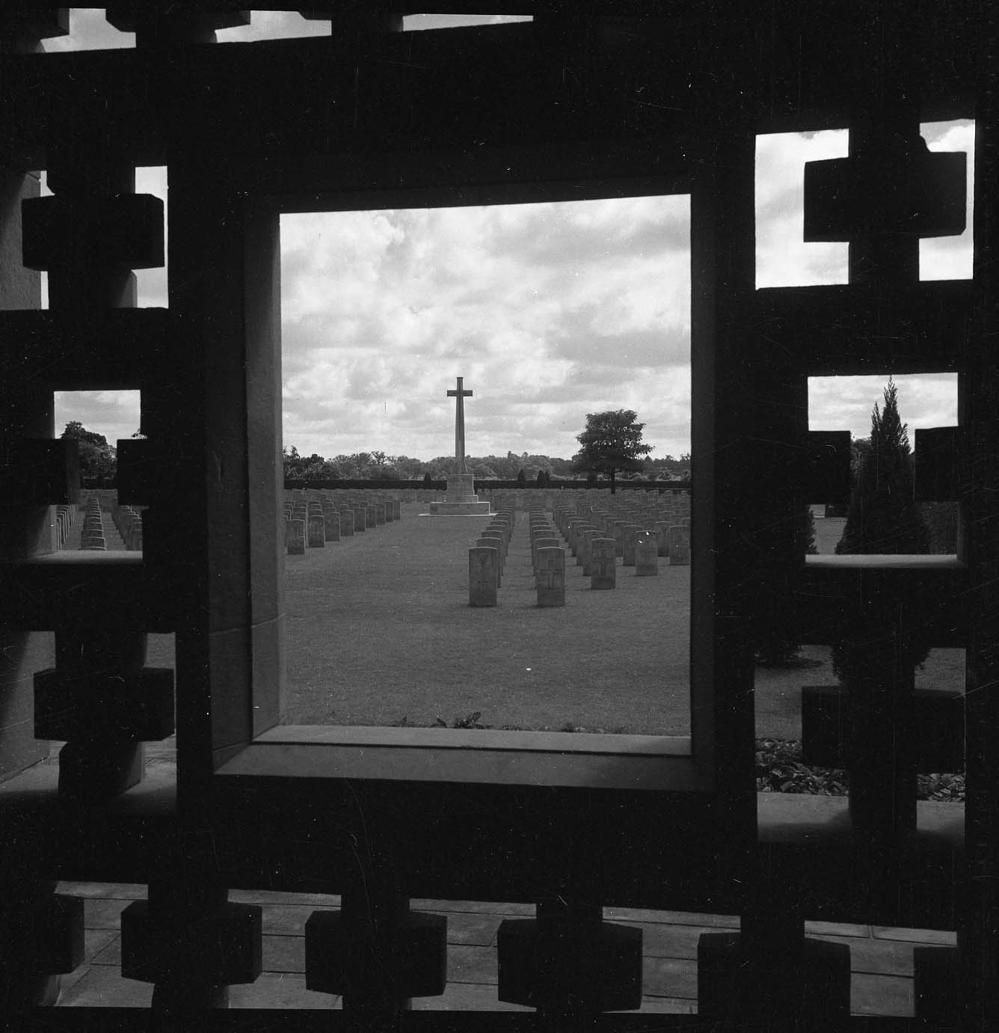
An alternative method is to use the architecture to help shape your photograph. This photograph at Ranchi War Cemetery, India, uses the intricate entranceway to create a frame within a frame, producing a photograph that can only be taken at that particular site.
Photographing Names and Inscriptions Clearly
If you’re visiting a site, chances are you’re visiting a specific person commemorated there. Taking a photo can help preserve the memory of your visit and allow you to share it with friends and family who couldn’t join you on your trip. Here’s what you need to do to ensure that you get the photos you need.
Keep the name readable
The key point: ensure that the name is legible. Start by taking a close-up of the name and inscription. Ensure the lettering is in focus and clearly readable. You might consider shooting one in black and white, to allow the contrast to ensure that the lettering is as clear as possible.
Use zoom if you prefer, but remember that zoom can sometimes reduce some of the clarity and detail in your shot.
As discussed previously, shooting from a lower angle can help make the inscription stand out and be easier to read.
Capture context as well as detail
Once you’ve got your close-up, take a step back and look around. What are the key parts of the site that you want to remember?
Start with a full photo of the headstone and its immediate surroundings and then extend out to the row or section of the cemetery that you’re focused on.
Photographing the context of the site will help you remember your visit and allow you to tell the fuller story of your trip.
Use light carefully
Whether you’re using your phone’s camera or a state-of-the-art professional setup, light is a photographer’s most important tool.
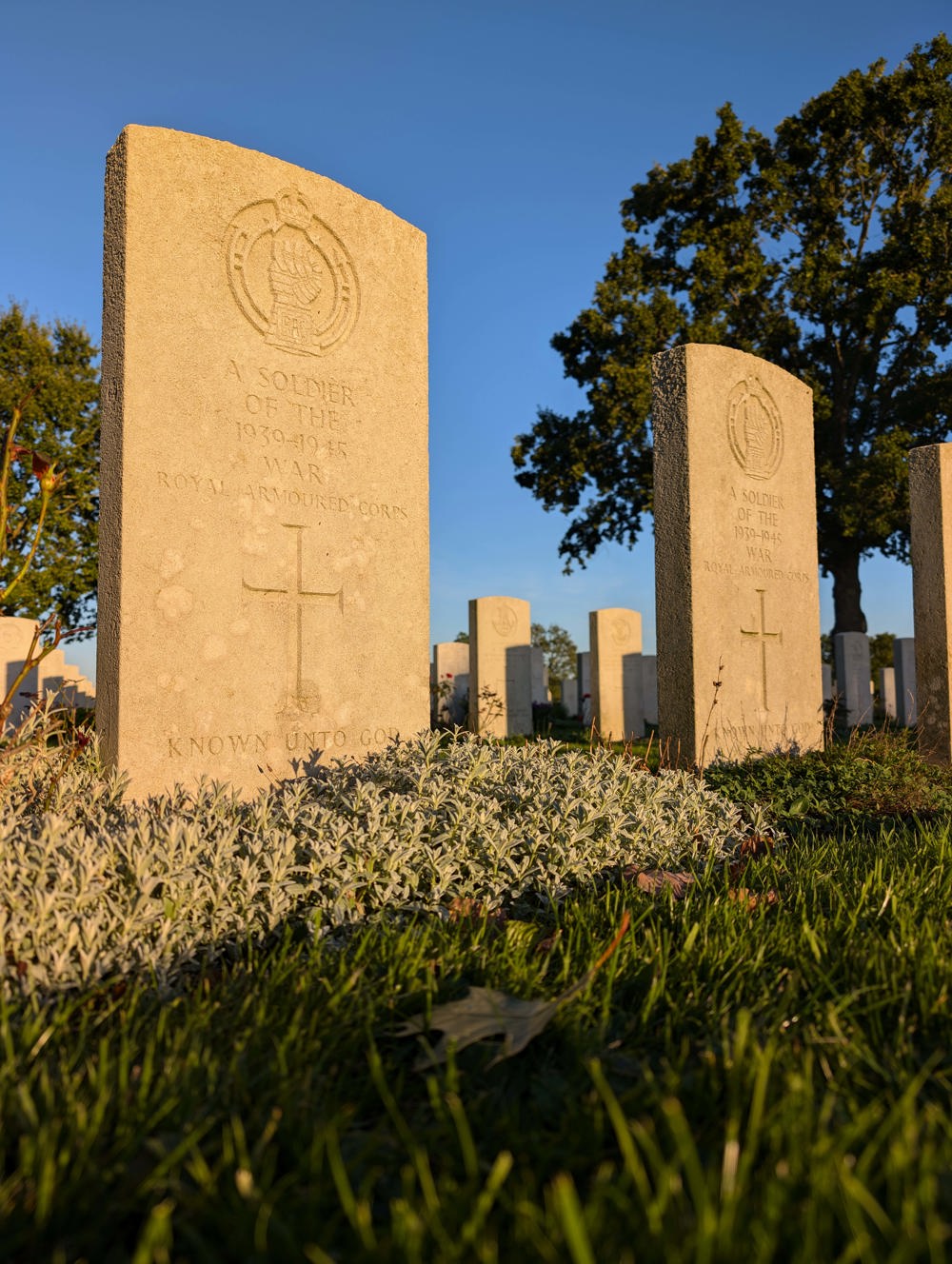
Taking a photo under the right light conditions can elevate your shot – many photographers prefer to shoot an hour or so after sunrise or an hour or so before sunset. This is commonly called ‘Golden Hour’.
In Golden Hour the light is often softer and warmer, creates softer shadows, and the lower angle of the sun can add texture to your shots.
There are many tools available online that will show you where the sun will be at the time of your visit, and when to best visit for golden hour.
This photograph from Normandy demonstrates how Golden Hour can lift your image.
Do not touch or alter the stone
As always, be respectful when visiting our sites.
When photographing a headstone, please do not clean, rub, chalk, wet, touch or move anything to make the lettering clearer, as it can cause damage to the stone, creating work for our maintenance team and impacting on other guests’ visits.
Photographing the Wider Place
Walking around one of our cemeteries or memorials can help you create some wonderful photographs. Using some basic photography techniques can help you turn the setting into the focus, creating memories that will last a lifetime.
Show the scale of the place
One of the first things people notice when visiting a site like Thiepval Memorial or Tyne Cot War Cemetery is the scale of the site. Seeing the sheer number of names and headstones creates a sense of perspective and helps reinforce the sheer scale of the losses of the two world wars.
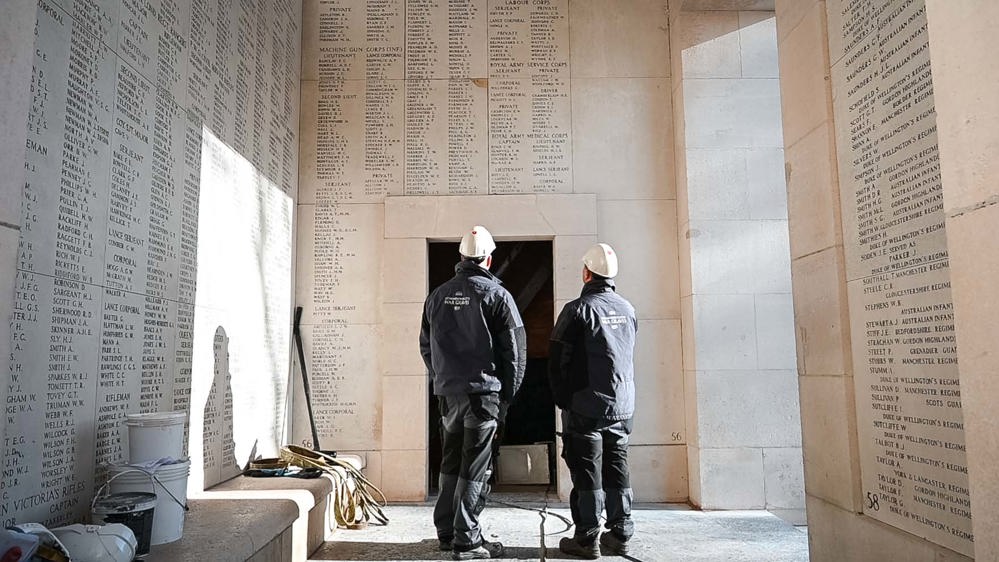
Changing the angle of your photograph can help you emphasise the scale of the site you’re visiting. When photographing a memorial to the missing, you could shoot from a low angle, looking up at the different names.
You can also use perspective to highlight scale.
In this photo taken at the Menin Gate, we’re shooting from a low angle, but also have featured colleagues at work. Compare their height to the height of the memorial panels to get perspective of the sheer number of names commemorated.
Notice planting and sightlines
The planting and layout in our sites is chosen with care to produce the best possible visitor experience, guiding our visitors through the sites and allowing them to find the people they want to commemorate.
You can use these same tools to create visual interest in your photographs. By composing your scenes carefully, you can use a lot of this detail to add visual interest to your shots.
Do this by layering your scene, to include your main focus but with texture in the foreground and background.
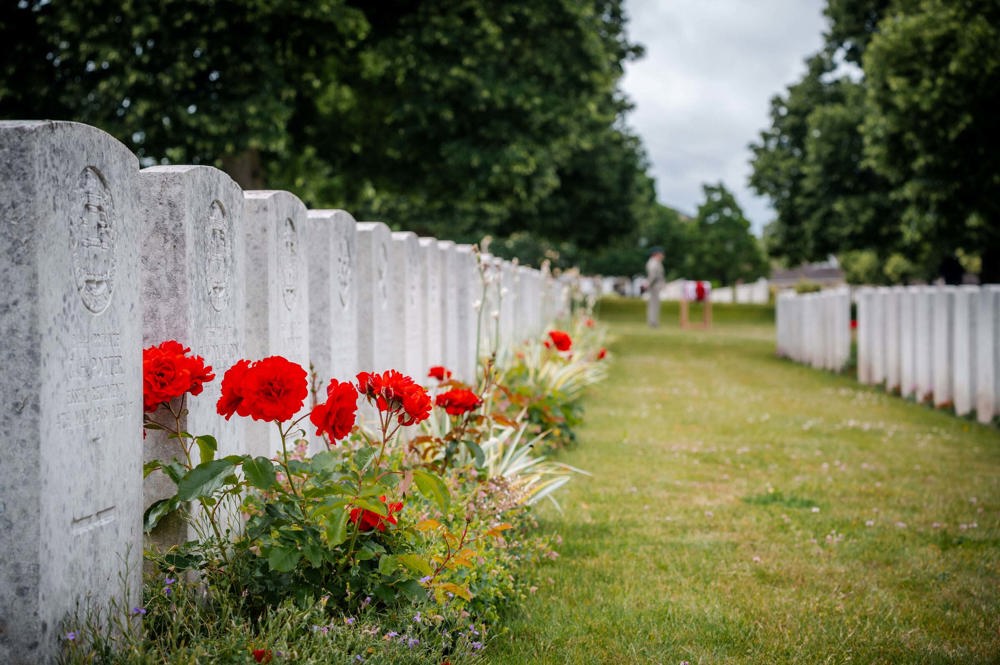
In this photograph, taken at a memorial service for Serjeant Henry Ashton Durham, our photographer has focused on the headstones and planting at the front of the frame, but allowed the sightlines created by the row of headstones to add visual interest, with the background including a subject.
Thanks to the large aperture lens, likely f/1.4, the background is softer so it doesn’t distract from the focus of the image, but still gives the viewer a little extra information and visual interest.
Include architecture and paths
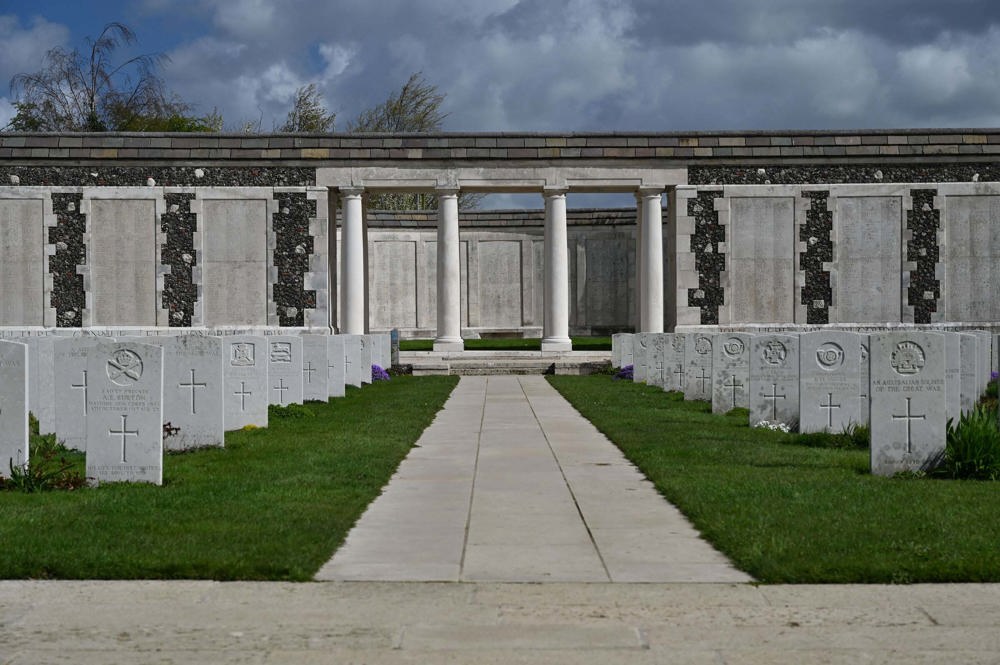
A frequently used technique in photography is the concept of leading lines. Leading lines is the process of using the physical features in your photography to draw the eye of the viewer to the focus of your photograph.
In our sites, the natural layout will help you create leading lines in your photography; from rows of headlines through to paths and architecture, you can use the design of the site to create a pleasing picture.
In this example, we’ve created leading lines at Tyne Cot, looking from the cemetery towards the memorial; the line of the path, headstones and the architecture in the background draws the viewer's eyes directly to the memorial.
Photograph the setting with care
As with any trip to one of our cemeteries or memorials, if you’re on a photography trip to one of our sites, please visit responsibly and respectfully.
As always, please stay to marked paths, do not move or damage any headstones or planting, and respect the environment around the site.
If you’re taking photographs, please be aware of other visitors and our staff that may be nearby. Other visitors are there to have a moment of commemoration, so ensure you don’t disturb them while they visit, or interrupt what might be a personal, private moment.
Photographing Memorials with Many Names
CWGC memorials to the missing are some of the most photogenic places you can visit – and are perfect for honing your craft. The combination of incredible architecture, beautiful horticulture, and powerful subject matter can help you take some stunning photos.
Start with the whole memorial
Such was the scale of sacrifice during the two world wars; our memorials can bear many thousands of names. A wide shot of the full memorial can help you capture the scale of the structure and provide context to some of the other photos you’ll take there. Using a wide-angle lens, like a 28mm, will help you capture the full picture.
Use our Find Cemeteries and Memorials tool to learn more about the memorial you’re planning on visiting.
Each one will be different depending on the number of casualties commemorated there, the people it commemorates, and its relationship with the landscape around it.
Compare the Menin Gate, which remains part of the fabric of Ieper thanks to its location within the town, and the Thiepval Memorial to the Missing, which stands high on a ridge, overlooking the battlefields of the Somme.
Photograph the panel or section
Photographing panels can be an art in itself. Each of the memorial panels can hold many names, so you’re capturing a lot of information all at once. Unless there’s a specific name you want to capture, try your best to capture the details that will help you tell the story.
Things like regiments, dates and inscriptions around the memorial will give context to your shot. You’ll also see panel or section numbers, that can help provide additional information.
Capture the individual name
If you’re visiting a memorial in the hopes of taking a photo of a specific name, then the first thing you should do, even before you visit, is look up the name of your casualty on our website.
Our Find War Dead tool will let you enter all the information you know about the person you want to commemorate and will then tell you exactly where their name is located on the memorial. Depending on the memorial, you’ll get panel or section numbers, which will then lead you to the name.
Being Considerate of Other Visitors
CWGC cemeteries and memorials are open to all, shared spaces for reflection and remembrance. We’re always delighted to welcome photographers to our sites and look forward to seeing the work you produce.
Give people space
Our sites are shared spaces, so you’ll often bump into other visitors. It’s very easy to get carried away focussing on your camera and getting the next shot, but if you see other visitors, respect the cemetery etiquette and ensure you leave them plenty of space to move through the site.
If there are other visitors to the site, ensure that you don’t disturb what might be an emotional visit for them, and avoid photographing other visitors without consent.
Be careful with portraits and group photos
When taking photographs of yourself and others, keep your photos low-key and appropriate, especially if you are later sharing them on social media. As always, keep noise and disruption low.
Keep pathways and entrances clear
If you’re bringing large amounts of kit with you, ensure walkways, gates and seating areas are kept free of clutter. Keep your equipment with you or ensure that it is safely out of the way and not impacting on other visitors’ experiences.
Sharing Photographs Online with Care
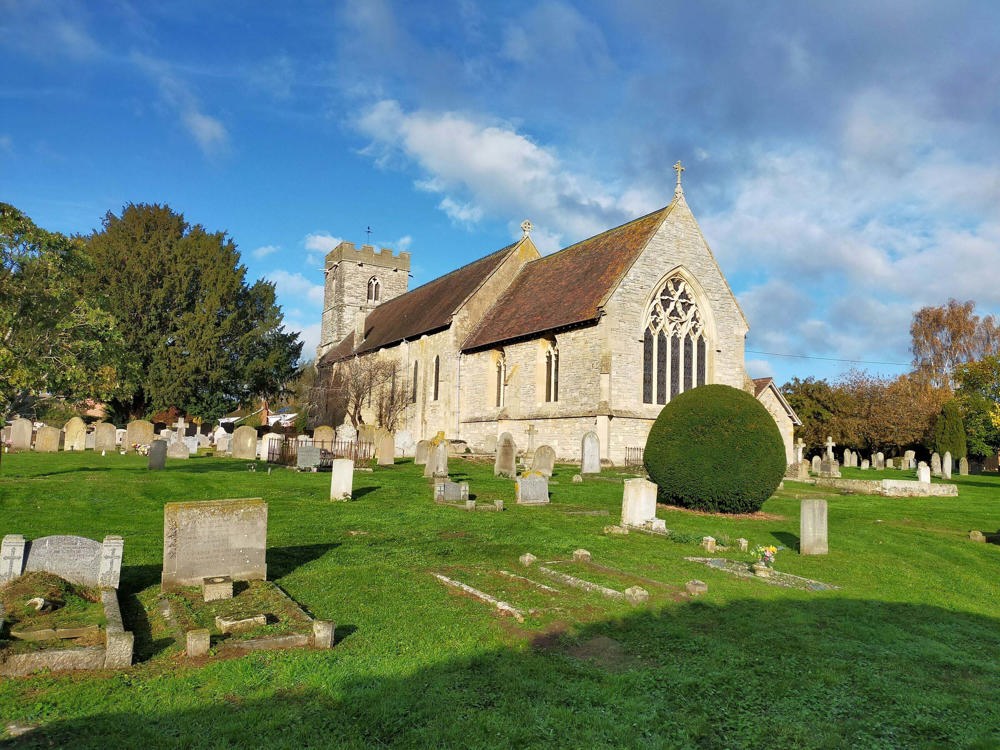
Many of our visitors share their photos of our sites on social media or elsewhere online. We’re always delighted to see the photos you’ve taken, but always want to make sure that our sites are shared responsibly online.
Add accurate context
Context is important, especially when discussing something as emotive as the two world wars. When posting, add a couple of lines of context to explain where you were and what you were visiting – there’s plenty of information available on our website you can use to get started.
Check names and details
You can also use our website to double-check details like spelling of names and places, especially if you’re travelling abroad and aren’t familiar with the local language.
You’ll also be able to add some extra details about the cemetery or memorial you’ve visited, from the number of casualties commemorated there, information about the construction or design of the site, and some wider World War history.
Think about tone
Whenever you speak about CWGC cemeteries and memorials, or the men and women of the Commonwealth we commemorate, ensure you keep a respectful tone. There is always the possibility that loved ones and descendants of the people we commemorate will see your photo, so ensure whatever your post would be suitable for them to read.
Credit the place
Credit the CWGC or tag our social media accounts when you post. Mentioning who we are will help others to discover our work, in turn helping others to discover the stories of the men and women we commemorate and the wider history of the world wars. Your photos can help us keep their stories alive and pass them on to the next generation.
Photography Tips for Different Types of Visits
People visit our cemeteries and memorials for many different reasons – most people will end up taking some photographs, but the kinds of photos taken will differ depending on your reason for visiting. Here are some photography tips for different visits.
Family history visits
Family historians will be visiting specific sites where loved ones are commemorated. The obvious photos to take in that case are of the specific headstone or inscription of the person you’re commemorating. Take some close-ups to make sure you’ve got the memory of the visit, but also have a think about some contextual shots.
In cemeteries, wider shots of the specific plot or row with a focus on the headstone you’re interested in will provide extra context to your visit.
At a memorial, you might want to keep an eye out for inscriptions on the memorial itself; often the name of the memorial is nicely engraved with a script explaining who the memorial commemorates.
School and education visits
For educational trips, this could very well be the first time many of your group have visited a CWGC cemetery or memorial. In that case, focus on the details of the site, to learn more about both the CWGC and the world wars.
Our sites have many clues that can teach you about our work, including the Cross of Sacrifice, Stone of Remembrance and headstone inscriptions. These make great photographs but can also be used to start conversations and form part of the living history of our sites.
Heritage and travel photography
If you are just looking to take incredible photographs of amazing heritage, golden hour is your friend here. Plan your visit for the right time and use the amazing light to take some amazing wide-angle photos.
Now is your chance to flex your creative muscles. Look for leading lines, frames within frames and the rule of thirds to construct frames that are enticing and interesting.
What Not to Do When Photographing CWGC Sites
We’ve discussed at length what to do when photographing our sites – but it's also important to remember what not to do when visiting, to ensure that your trip is enjoyable and successful.
Do not touch or alter memorial features
Many of our cemeteries and memorials are now more than 100 years old, or close to. They have stood the test of time because they are carefully maintained and looked after by our teams of experts around the world.
Do not touch or alter any of the stonework in our cemeteries or at our memorials, including using water or chalk on the headstones or panels – even the slightest piece of damage can grow into a serious headache for our teams.
Similarly, please do not disturb or damage any of the plant life around our sites. Not only will this then need fixing by our teams, but it could impact the experience of the next visitors to the site.
Do not disturb other visitors
Everyone is welcome to visit our sites around the world. Help maintain the respectful, welcoming atmosphere of our sites by not disturbing other visitors when taking photographs, including making sure that you’re not accidentally including them in your photos.
Do not enter restricted areas
You may be tempted to step into restricted areas while chasing the perfect photograph. While we understand why you might want to, restricted areas are restricted for your safety, so please stick to the marked paths and find a different shot to take.
Do not share unsupported claims
When posting your photography, please don’t share unsupported claims about our sites or our work. If you’re unsure about anything, check out our website where there is a wealth of information to help you, or contact our expert enquiries team, who’ll be happy to assist you however they can.
Photographing CWGC sites FAQs
Yes, you can take photos at our sites. Please ensure that you’re respectful of others and do not enter any restricted areas while visiting. If you wish to use drones for photography, please check local rules and CWGC/site guidance first.
Yes, you can photograph a CWGC headstone or memorial panel. We ask that you do not use water, chalk, or any other substance to make the inscription clearer, as this may damage the stone.
To photograph a name on a CWGC headstone or memorial, use the zoom function of your phone or camera to get a close up. You should also experiment with angles to get the best view.
Yes, please do share photos of our cemeteries and memorials online. Please tag us when you do, and add context about your visit. You can check details of the site you visit on our website.
Yes, you can use a tripod in a CWGC site. Please ensure that you do not affect any other visitors by blocking pathways or gates.
If you wish to use drones for photography at our cemeteries and memorials, please check local rules and CWGC/site guidance first.
No, please do not use water, chalk, or any other substance to clean the headstone you are photographing. If you are struggling to see the inscription, you can report the headstone to our enquiries team, who will be able to report it to the nearest maintenance team.
If you are visiting a specific casualty, you can use our Find War Dead tool on our website to find out more about them. You’ll discover where they are commemorated, as well as the specific location within the site.
For family history research, you should photograph the headstone or memorial panel where the casualty is commemorated, but also take some wider shots to ensure that you’ve got the proper context.
On memorials with many names, you can use a shallow field of view to ensure that the name you are most interested in is sharply in focus, while the names around it are focussed on less. This will draw the viewer’s eye to the name you want to record.
Author acknowledgements
Aidan Parr is the CWGC’s Website Content and SEO Manager. He has worked at the Commonwealth War Graves Commission since 2019, writing extensively about the world wars and the work of the Commission around the globe, as well as being a keen amateur photographer.