

20 July 2026
A Guide's Guide to The Royal Naval Division on the Somme
We are delighted that one of this year's CWGF Guides, Eilidh Bowen, is being sponsored by the Royal Navy and Royal Marines Charity.
What you may not know is the Royal Navy, via the Royal Naval Division, has its own fascinating history during the Battle of the Somme.
In our latest Guide's Guide, Eilidh takes us through the often-overlooked story of the Royal Naval Division and its time on the Somme. Over to Eilidh.
The Royal Naval DIVISION on the Somme
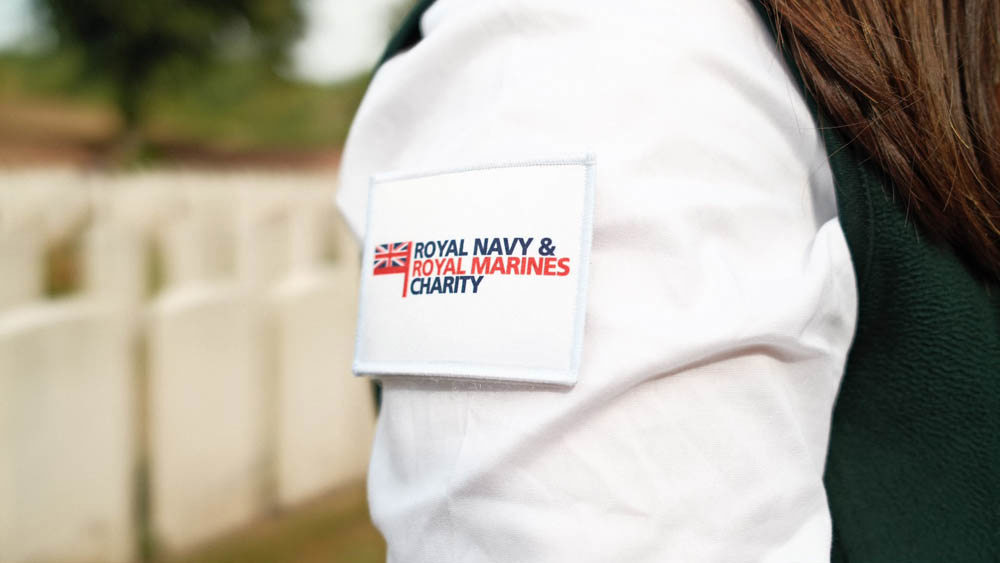
Image: Eilidh's is being sponsored by the Royal Navy & Royal Marines Charity for this year's Guide Programme, showcasing her close connection to the Royal Marines
“Once a marine, always a marine!” is a phrase I have grown up with and become very familiar with.
My Grandad served as a Royal Marine, and they have a striking culture. The military is a tight community – a family - one that never breaks even as the years pass by.
The Royal Navy is the oldest branch of Britain’s armed forces.
During the First World War, you may know of their efforts in the Battle of Gallipoli (1915) and the Battle of Jutland (1916), but do you know about their efforts in the Battle of the Somme? Why were sailors on land? How did their experiences differ from those of the regular infantry soldier?
The 63rd (Royal Naval) Division was established in 1914 following a surplus of some 20-30,000 reservists who had enlisted in the Royal Navy.
These men simply were not needed, but were enough to form two Royal Naval Brigades and a Royal Marine Brigade. These sailors were reorganised and trained to fight as infantry on the Western Front. This is the story of those brave men who fought and fell on the Somme battlefield.
I have decided to highlight some experiences of men who lived locally to me in Dundee, Scotland, whose lives became intertwined with one of the bloodiest battles of the First World War.
These men may have come from different backgrounds and perhaps never met each other; however, they represent a collective memory on the Somme from a Dundonian experience.
The city has a strong Naval history; the spectacular HMS Unicorn is the location where young men enlisted into the Navy during the First World War. These men enlisted expecting to serve at sea and on ships. Few could have imagined that they would instead find themselves fighting through the mud of the Somme.
The Battle of the Ancre, November 1916
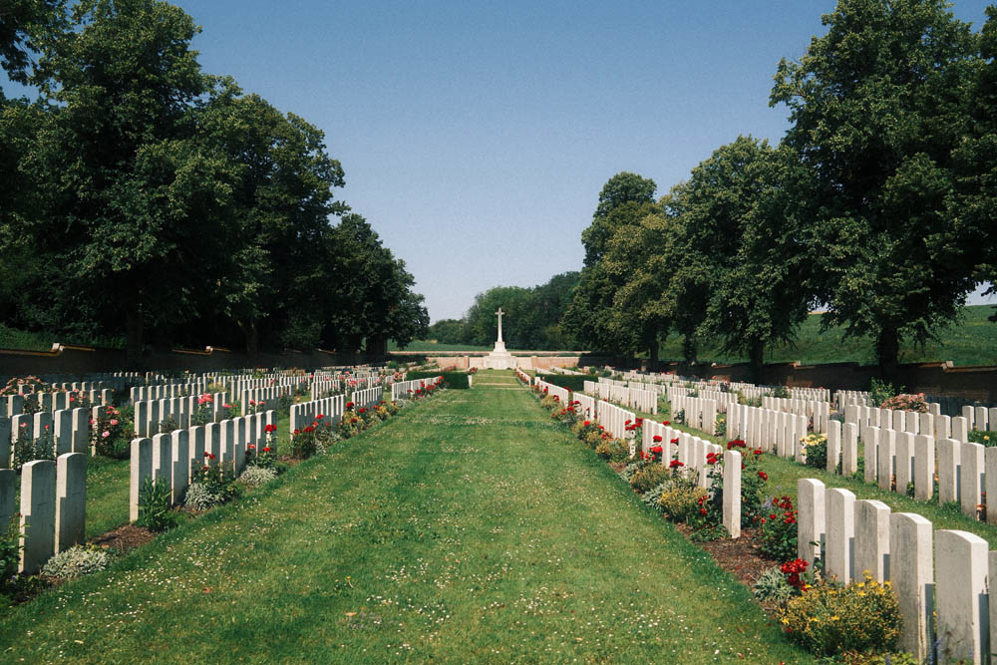
Image: Ancre British Cemetery, where over 400 Sailors and Marines are buried
At 0545 on the morning of 13 November 1916, the Royal Naval Division (RND) stepped into No Man’s Land and advanced towards the German front lines. This was the first day of the Battle of the Ancre, and the costliest single day in the division’s history during the First World War.
The objective of the British forces in this battle was to capture the higher ground of Beaucourt Station before winter.
The Germans had been settled into the lines for some time, and many German machine-gun positions had survived the preliminary bombardment of artillery or remained difficult to suppress, allowing them to pour enfilading fire across the advancing troops.
The 188th and 189th Brigades of the RND felt the effects of this especially, suffering heavy casualty rates.
On 14 November, the RND successfully captured the objective at Beaucourt, but at what cost? By the end of the Ancre action, the 188th and 189th Brigades had sustained some 4,000 casualties, killed, missing, or wounded.
Over 400 Royal Navy Sailors and Marines are today buried in Ancre British Cemetery
The Lost Sailor
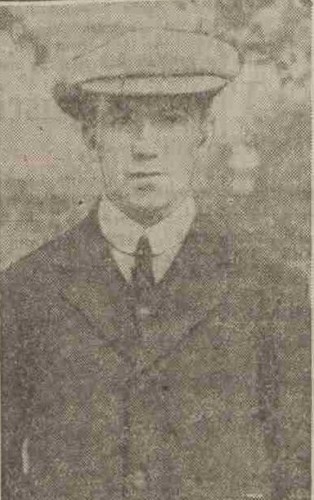 Image: Able Seaman Alexander Duncan
In April 1915, Able Seaman Alexander Duncan was a lad from Dundee who enlisted at the Royal Naval Volunteer Headquarters at HMS Unicorn in Dundee.
He worked as a grocer in the city before the war broke out and did an apprenticeship at a local foundry.
Serving with the Hawke Battalion in the Dardanelles in 1915, Duncan was shot in the thigh and spent some time in hospital in Alexandria.
In May 1916, the battalion set sail for France. Following their arrival in France, the RND underwent further training in infantry tactics before entering the Somme campaign.
This training enabled sailors to adapt quickly to trench warfare, combining their naval discipline with the tactics required of infantry soldiers.
Duncan was reported as missing in action on 13 November at the age of 22 and has no known grave.
He is now commemorated on the Thiepval Memorial to the Missing of the Somme, which commemorates over 72,000 names of those who fell on the Somme.
Dundonian Traces at Ancre
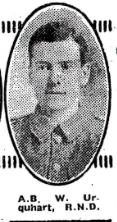
Able Seaman William Urquhart enlisted on 27th September 1914 at HMS Unicorn. Urquhart worked as a dental mechanic at home with his father prior to the outbreak of war and was from Broughty Ferry.
He served with Drake Battalion before being posted to the 189th Brigade Machine Gun Company in October 1916.
Following the assault on 13 November at Ancre, Urquhart was reported missing in action, and it was soon established that he was killed in action at the age of 21.
His mother had received a letter from a comrade, however, that he had buried Urquhart himself.
His body was recovered several weeks later during the clearance of the battlefield, and is now buried at Ancre British Cemetery, not far from where he would have originally fallen in battle.
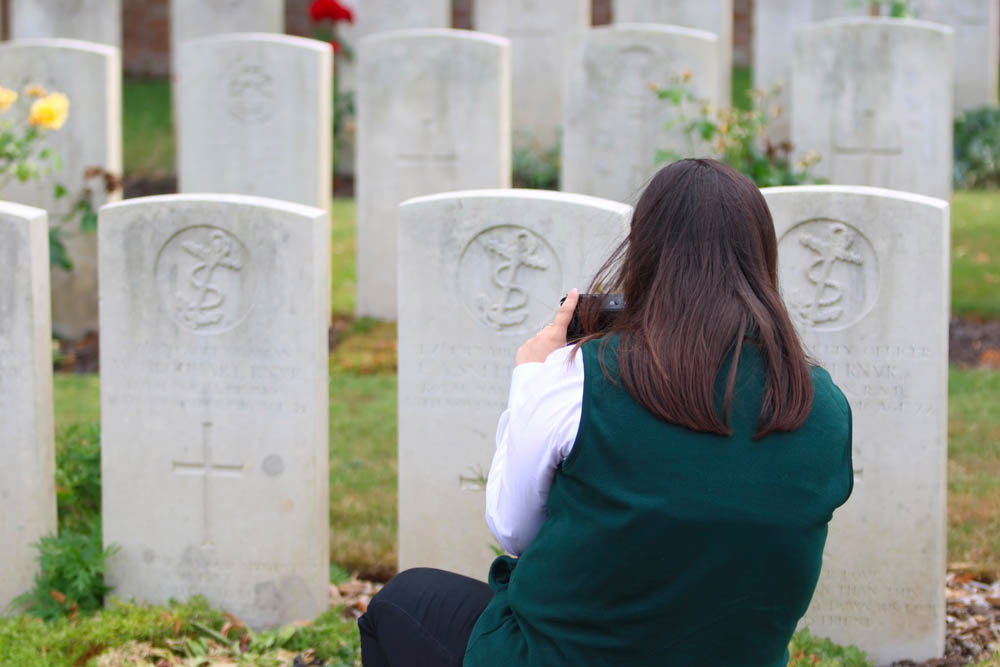
Image: Eilidh among the headstones at Ancre British Cemetery
It is a part of history that I am grateful to present when I speak to visitors about the Navy and Marines on Thiepval Memorial.
The grounds are comforting and the high walls separating the cemetery from the old battlefield surrounding it allow you the peace and quiet you desire when visiting sites of such devastation.
There are a few men buried here who came from Dundee, and in a way, it makes me feel like there is a little bit of home buried here too.
The efforts of sailors and marines during the Somme is a unique one; they were not originally trained for trench warfare, but they fought tirelessly, nonetheless.
The RND soon earned a reputation as a “Can Do” regiment on the Western Front, proving just how valued they were as a fighting force. The division would go on to fight at Ancre and across the Somme again over the course of the war, and at the Third Battle of Ypres (Passchendaele) in 1917.
Our Guides rely on your support. Donate today
The Commonwealth War Graves Foundation Guides Programme allows young history lovers to work for Commonwealth War Graves in France and Belgium.
They welcome visitors, share the incredible stories of those commemorated by Commonwealth War Graves, and assist our guests on their journey of remembrance at important sites on the Western Front.
We’re passionate about preserving the memories of the Commonwealth’s war dead and interacting with young people to keep their stories alive. Our Guides help us in our core mission while becoming equipped with real-life skills to aid their personal development.
Our Guides Programme relies on your generosity.
£100 could pay to fully train one of our Guides ready for their experience of working abroad so they are best able to welcome visitors, share the incredible stories of those we commemorate, and help assist visitors on their journey of remembrance.
Please donate to the Commonwealth War Graves Foundation today to keep projects like this going.
Donate Online Now
By donating to the Commonwealth War Graves Foundation, you are helping us to keep the stories of the brave servicemen and women who died in the two World Wars alive. Can you help us ensure that their sacrifice is not forgotten?

Your donation enables us to continue sharing the inspiring stories of those like Ensign Violette Szabo, a brave SOE operative and spy who was executed in Ravensbrück concentration camp and posthumously awarded the George Cross. Violette is commemorated at our Brookwood Memorial.