22 June 2026
Introducing the 2026 CWGF Guides: Our most international group to date!
It’s time to welcome a new wave of CWGF Guides to select sites in France for this year’s Guide Programme.
Coming from the UK, France and South Africa, our group is our most international to date.
And what a time to be a CWGF Guide on the Western Front! 2026 marks the 110th Anniversary of the Battle of the Somme, one of the most significant events of the First World War.
Our Guides will be on hand at select sites to help guide visitors through our sites, better understand the stories of the people we commemorate, and immerse themselves in the history of the Battle of the Somme.
Get to know our 2026 Commonwealth War Graves Foundation Guides here.
2026 Commonwealth War Graves Foundation Guides
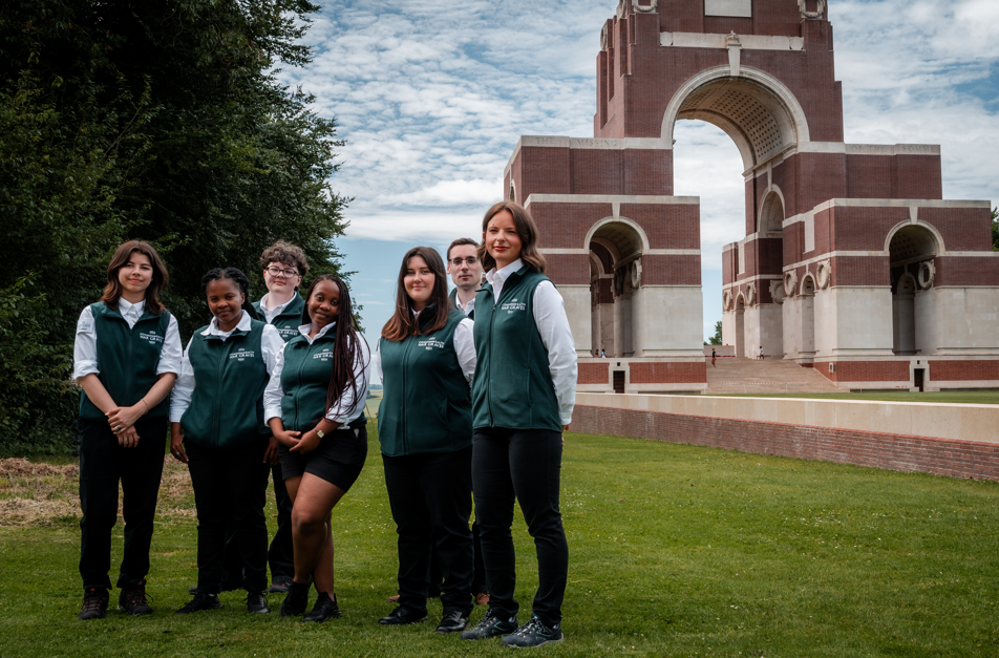
Image: From left to right, CWGF Guides Isa, Refilwe, one of our French Guides, Tebatso, Eilidh, and Rachael
Rachael Bayley - UK Guide
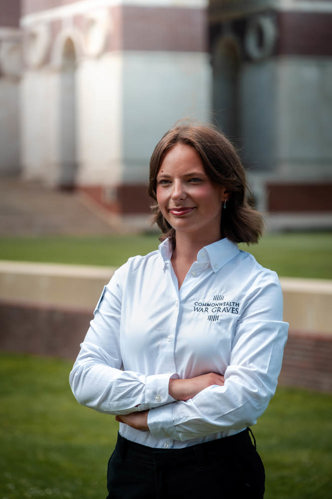 Hello, my name is Rachael. I am 22 years old, and I am thrilled to be working as a guide for the CWGC this summer.
My interest in the First World War stems from a childhood spent visiting historical sites with both my school and my family. This year, I will be returning to Thiepval, almost ten years after my first visit, when I came on a secondary school Battlefields Trip.
I recently graduated from York St John University with a degree in English Literature. My passion for history was reflected in my final-year dissertation, in which I explored the conflict between ideology and lived experience in German testimonies of the First World War. A key finding of my research was that no two experiences of war are the same; it is through these differences that we gain deeper insight and understanding.
Working for the CWGC this summer offers me the opportunity to build on this interest and to uncover some of the individual stories behind the 72,000 names commemorated on the Thiepval Memorial.
The CWGC’s mission to commemorate fallen service personnel, particularly through the collection of personal stories on its online platform, For Evermore, closely aligns with my belief in the importance of individual remembrance.
I am already captivated by the poetic atmosphere of the Somme landscape, and I look forward to seeing where this experience will lead. Living abroad has always been a dream of mine, so the opportunity to combine this with my academic interests is something for which I am extremely grateful.
Refilwe Raphadu - South African Guide
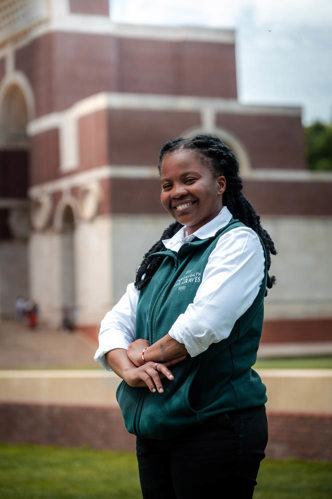 Hello, hi!
My name is Refilwe Raphadu, and I am a 28-year-old History PhD candidate at the University of Johannesburg (UJ). I was born in Germiston, a city in Gauteng province, South Africa, and I currently reside in Tembisa, where I completed my secondary education at Thuto-Ke-Maatla Comprehensive School.
I hold a degree in Politics and International Relations from UJ, majoring in both politics and history, as well as an Honours degree in African Studies, where my research focused on history
.
My Master’s degree is in medical history, in which I studied the yellow fever epidemic in South African gold mines from the early 1940s to the early 1960s.
This research explored how the South African Department of Health collaborated with the gold mining industry and the South African Institute for Medical Research to prevent the spread of yellow fever into the Union.
As yellow fever is a mosquito-borne disease, one of the key strategies involved mosquito control, an area that sparked my current PhD research.
My PhD focuses on the eradication of mosquito species such as Anopheles (the malaria vector) and Aedes aegypti (which transmits diseases including yellow fever, dengue, Zika, and chikungunya) in South Africa between 1910 and 1960.
I examine the scientific and technological approaches used, including laboratory work, as well as the controversies surrounding eradication efforts at the time.
I am also interested in the wider social and environmental impacts of these strategies, the role of climate in their effectiveness, and the policies that both shaped and were shaped by these efforts, particularly in light of the current resurgence of malaria in South Africa.
Alongside my studies, I work at the University of Johannesburg as a tutor for Development Studies and have also worked as a Writing Centre Consultant.
These roles have helped me develop strong communication skills, which I bring to my work as a guide with the Commonwealth War Graves Commission. When I first heard about this opportunity, I immediately applied, driven by my passion for teaching and learning.
Given my background and interest in both history and epidemics, I am particularly fascinated by the “dual-front” challenges faced by troops during the Battle of the Somme, combating both disease and the enemy.
My time with the CWGC so far has highlighted the importance of diversity, sensitivity, and thoughtful engagement with both people and the past. Being stationed at Thiepval has reinforced my understanding that memorialisation is deeply connected to lived experience, these are not just names, but individuals who remain a source of pride, memory, and identity for many.
I am especially looking forward to hearing more of the personal stories behind those commemorated, as well as the experiences visitors bring with them when they visit CWGC sites. If you haven’t yet visited, I highly encourage you to plan a trip, I promise it will be one of the most meaningful experiences you can have.
See you soon!
Severine - UK Guide
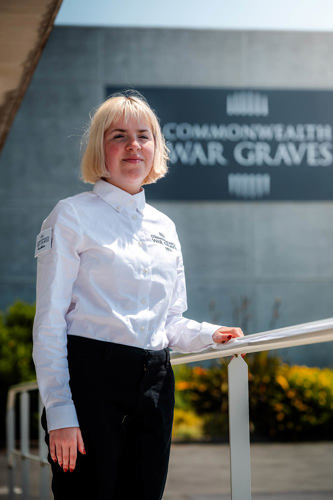 Hi, I’m Severine, one of the UK guides participating in this year’s programme. I’m 22 and originally from North West London.
I graduated from the University of Glasgow in 2025 with a degree in Classical Civilisation. During my time at university, I volunteered with both English Heritage and the National Trust for Scotland as a visitor assistant across several historic properties.
One experience in particular, working in a historic house that preserved the life of a woman who lived through both World Wars, sparked my interest in understanding what life was like for civilians and soldiers during this period. This interest ultimately led me to apply for the guide role at Thiepval.
One of the most rewarding aspects of this role for me is helping visitors locate family members or friends on the memorial. These moments often lead to deeply personal and illuminating conversations, and I’m especially looking forward to helping visitors transcribe and upload these stories to our online portal, For Evermore.
I believe that personal stories are key to preserving the legacy of First World War soldiers and keeping the memory of their service alive, so I’m very grateful to be part of this year’s guiding team.
Outside of work, I’m keen to improve my French and am really looking forward to living and working in Arras. I’m also excited to visit First World War sites in the surrounding area and learn more about the conflict from a French perspective.
As for the future, I’m still figuring things out, perhaps a Master’s in Museum Studies.
Precious Rhulani
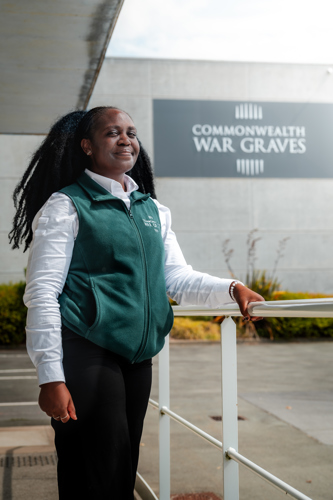 Hello, my name is Precious Rhulani Mashaba. I was born and raised in Alexandra Township, South Africa.
I hold a bachelor's degree in Historical Studies and Linguistics and am currently pursuing a master's degree in Historical Studies, in the University of Johannesburg.
My research focuses on student politics in Atteridgeville Township between 1980 and 1994. My interests include storytelling, oral history, struggle movements, and conflict resolution.
When I learned about the opportunity to become part of the 2026 Commonwealth War Graves Foundation Guide programme, I immediately knew I wanted to apply. As someone who conducts oral history interviews, I value listening to people's lived experiences and preserving stories that might otherwise be forgotten.
This opportunity allows me to engage with visitors who have personal connections to the soldiers commemorated by the Commonwealth War Graves Commission. Their memories remind me that history is not only found in books and archives but also in the experiences people carry with them.
The programme also gives me the opportunity to educate visitors about the importance of preserving our shared history.
It is a privilege to contribute to an organisation dedicated to ensuring these stories continue to be remembered by future generations. At the same time, I strengthen my communication and oral history skills while learning to approach conversations with empathy and sensitivity.
Living in France is the fulfilment of one of my personal goals and an opportunity to grow both professionally and personally.
This experience reminds me that, whether I am documenting the stories of South African communities or sharing the histories of those commemorated by the Commonwealth War Graves Commission, storytelling has the power to preserve memory, build understanding, and connect people across generations.
Romain - French Guide
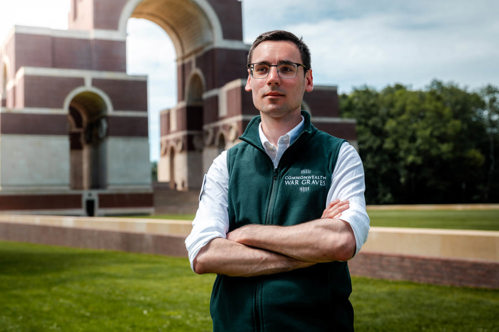 Hello, my name is Romain. I am 26 years old and come from Arras, France.
I hold a Master’s degree in Art History, and I am passionate about sharing my interests with the public. I am particularly drawn to the military and geopolitical history of the two World Wars, whether exploring large-scale strategies or the personal stories of individual soldiers who experienced them.
I previously worked for one year in Farbus, a small village on the Vimy Ridge, as a historian. My role involved collecting archival material to reconstruct the village’s wartime history. Farbus was captured by German forces and later almost entirely destroyed by French and British artillery. It was eventually liberated by the Canadian Army during the Battle of Vimy in April 1917, and the impact of the war is still visible there today.
Through conversations with local inhabitants, who shared their family histories, as well as through gathering photographs, letters, and documents, I discovered how much I enjoy piecing together different sources to better understand broader historical events through local experiences.
Being in the Somme and learning about the many smaller battles along the front line, often in cemeteries built directly on those sites, is particularly compelling to me. In France, the Battle of Verdun is often more prominent in education, so working here has allowed me to discover the history of the Somme in greater depth, as well as the dedication of Commonwealth soldiers who fought in the defence of France.
Alongside history, I have a deep appreciation for art in all its forms. The evolution of art in the early twentieth century, particularly the Avant-Garde movements, is something I find especially fascinating. The profound impact of the First World War on artists and artistic expression is striking, and during my time at Thiepval I am keen to explore artworks connected to the conflict.
For me, Thiepval represents a perfect combination of my interests. Its impressive architecture and ever-changing light make it a remarkable work of art in itself. At the same time, the names inscribed on the memorial serve as a powerful reminder of the battles fought on the Somme and the immense human cost of the war.
I greatly value the opportunity to share my knowledge with visitors, while also learning from their stories and perspectives. I am also excited to develop my communication skills, which will be invaluable for my future career in the museum sector.
Beyond this, I am delighted to work alongside colleagues from different countries, particularly my English and South African teammates, and to share our respective passions and perspectives.
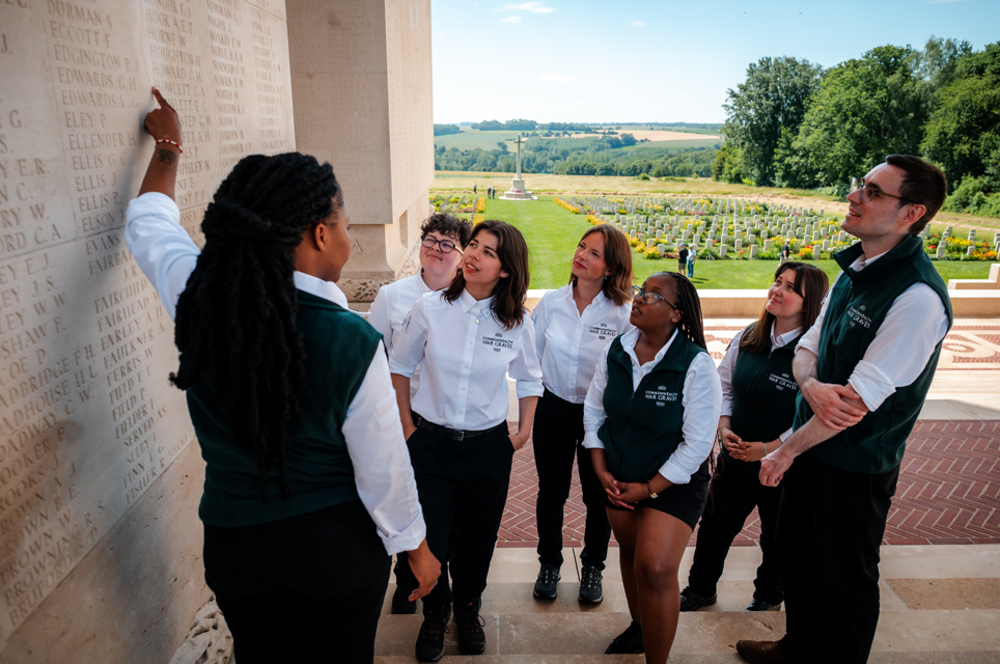
Image: Practising sharing the stories of those we commemorate at the Thiepval Memorial to the Missing of the Somme
Isa - UK Guide
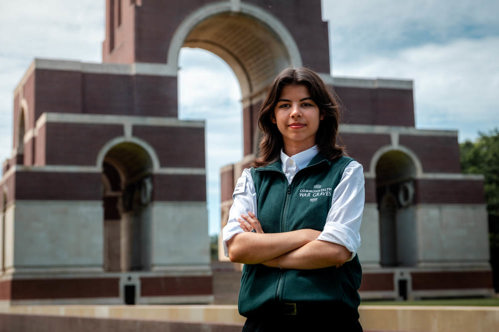 Hi, I’m Isa. I’m currently an undergraduate student at the University of Cambridge, studying Modern and Medieval Languages, specialising in French and Spanish.
During my time at Cambridge, I have developed a growing interest in how different nations engage with and reckon with periods of historical trauma. Through this, I’ve come to appreciate the importance of the generational transmission of collective memory.
As a CWGC guide, I’m proud to play an active role in continuing these conversations, which contribute to the broader work of preserving heritage.
The two World Wars were seismic events that shaped societies and cultures in profound ways. I’m particularly interested in ideas of nationhood, and in how the war contributed to shaping feelings of unity, difference, and national identity. One of my aims during my tours is to challenge the common misconception that the “British forces” were made up solely of soldiers from Britain as we know it today, rather than from across the former British Empire, representing communities from around the world.
The commemorative sites cared for by the CWGC are also deeply meaningful to me on a personal level, as someone who identifies as a pacifist. I see their role as serving as powerful and enduring reminders of the human cost of war.
Finally, the Summer Guides Programme has already been an incredibly stimulating experience. I’ve not only broadened my historical understanding, through engaging with experts in the field, but have also improved my French while living and working in France over the course of the programme.
Tebatso Pooe - South African Guide
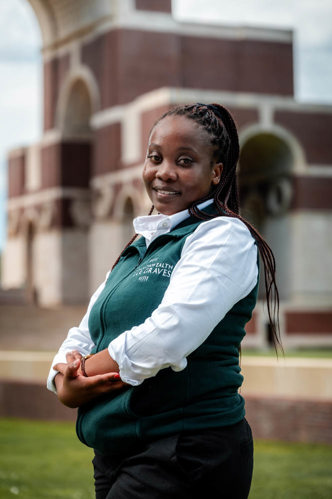 Hello! My name is Tebatso Pooe, and I am thrilled to be part of the CWGC Guides Programme for 2026. I am from Pretoria, South Africa, and feel incredibly honoured to be among the first guides from my country to take part in the programme in a very long time.
I am currently undertaking a Master’s degree in History, with a focus on the evolution of nutrition from the nineteenth through to the twenty-first century. My research explores how diets have shaped the ways in which people work and live, particularly from a Southern African perspective, highlighting the interconnectedness of food, labour, and society.
Although I do not come from a background in military history, I see this role as a valuable opportunity to broaden my knowledge and deepen my understanding of the past. I am also interested in exploring potential connections between war and diet, and how these might inform my own research. I have embraced my time away from family and friends as an exciting new adventure.
At first, the programme felt quite overwhelming, but after an intensive week of training, I gained both knowledge and confidence. I now feel well prepared to give my best during tours, particularly when discussing the Battle of the Somme at Thiepval.
One of my favourite aspects of guiding has been listening to the stories visitors share. It is not only about providing information, but also about understanding the lasting personal impact of the war. I value these exchanges deeply, as each visitor brings a unique perspective.
Some of the most rewarding moments have come from helping visitors locate the name or grave of someone meaningful to them. Seeing their emotional connection and being able to support them in that moment is truly special. I am also captivated by the beauty and care of the cemeteries, their peaceful, well-maintained landscapes are a testament to the dedication of the CWGC team.
Being here has given me the opportunity to experience a new country, culture, and language, which I am eager to embrace. Looking ahead, I hope to document my day-to-day experiences and the people I meet along the way in a future blog.
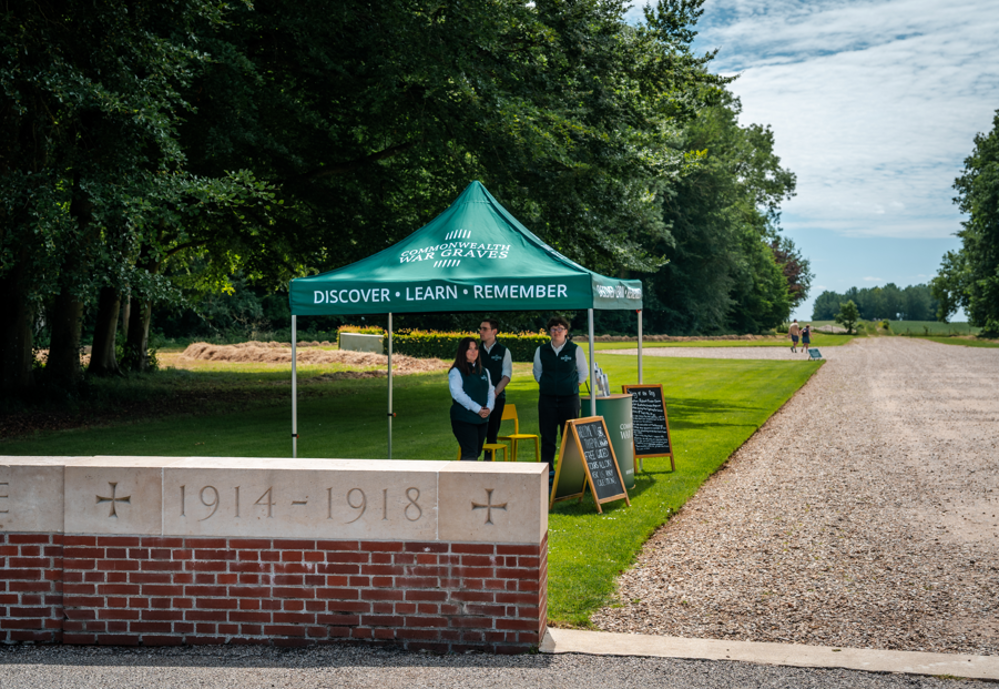
Image: Make sure you say hello if you're visiting Thiepval this summer - the Guides are eager to help you!
Eilidh bOWEN - UK Guide
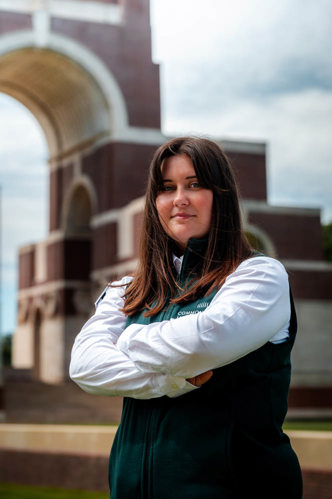 Hello! My name is Eilidh, I’m 22 years old, and I come from Angus in Scotland. I graduated from the University of Aberdeen last summer with a degree in History, where I developed a particular passion for military history and remembrance.
During my studies, I focused extensively on military history, with a particular interest in the social history of the First World War. For my dissertation, I researched the experiences of soldiers from the Black Watch in the trenches, exploring how they communicated their experiences to family, friends, and the public at home through personal correspondence.
This research allowed me to build a deeper connection with the regiment and to appreciate the individual stories that often lie beneath the broader narratives of the war.
Alongside this, I have a strong interest in the history of the Second World War in Eastern Europe, particularly resistance movements, the Holocaust, and life under Nazi occupation. I also spent time as an archival volunteer with the Auschwitz-Birkenau Museum, which deepened my understanding of remembrance and the role of historical sites.
It has been especially thought-provoking to consider how places such as the Thiepval Memorial endured a second global conflict, standing not only as memorials to the fallen, but as enduring symbols of remembrance across generations.
My passion for conflict history and remembrance is also deeply personal. My Grandad served as a Royal Marine, my great-grandparents were active during the Second World War, and many of my male relatives served during the First World War. I was also an Air Cadet throughout my teenage years and currently volunteer with Poppy Scotland.
I first visited the battlefields on a high school trip, which sparked my initial fascination with the First World War. During the COVID-19 pandemic, I launched an independent research project, through which I investigated the lives of around 600 men from my local area. This work reinforced my belief that every individual has a unique story that deserves to be remembered and shared.
As a CWGC Guide in France, I am excited to share the stories of the soldiers I have researched, many of whom are commemorated on the Thiepval Memorial, while continuing to learn from the personal connections visitors themselves bring.
Working on the Somme during the 110th anniversary commemorations is a privilege and an experience I will always treasure. Being surrounded by the landscape where the war unfolded is both powerful and surreal, and I am greatly enjoying the opportunity to familiarise myself with specific battle locations, something that is difficult to do from afar. I hope to one day become a battlefield guide, and I believe this summer will only strengthen that ambition.
Nyeleti Chabalala - South African Guide
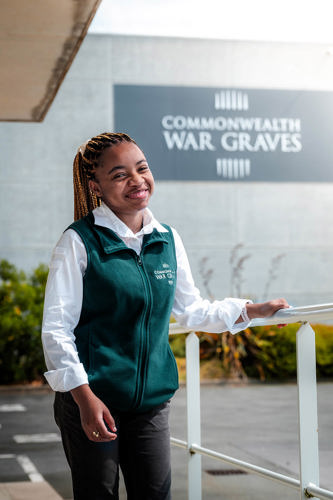 My name is Nyeleti Chabalala, and I am a 23-year-old Master’s in History candidate at the University of Johannesburg.
My research sits at the intersection of gender, politics, and the law. It examines how students and the labour movement united in the 1980s to resist Apartheid, and traces the gender bias embedded within that alliance. It investigates how women in political resistance had to negotiate their femininity, often adopting a more masculine persona, in order to be recognised as “true activists.”
Through this research, I have encountered numerous inequalities rooted in gender, race, and economic status. What draws me to the CWGC is precisely its refusal to replicate those hierarchies in death: every soldier is commemorated equally, with the same dignity and the same headstone, regardless of rank or financial standing. It is a privilege to work for an organisation that upholds this principle of equality.
As someone with family currently serving in the South African National Defence Force, I understand deeply what the CWGC’s work means. It gives families a place of remembrance, somewhere to feel connected to loved ones, where brothers, uncles, fathers, neighbours, and friends are honoured with the respect they deserve.
It is a privilege to be a guide with the CWGC this summer. Each day, I meet people from around the world who arrive carrying personal stories of the soldiers commemorated at Thiepval, and I get to help bring the names and service numbers on the Memorial back to life.
Beyond the work at Thiepval, I have loved experiencing French culture and cuisine. One thing I’ve come to love most is the cathedrals especially the intricate architectural detail in every arch, spire, and stained-glass window never fails to move me. I hope to visit as many as I can before my time here ends.
One of our French Guides
Hello! I am one of the guides for the Commonwealth War Graves Commission, and you can find me at the Thiepval Memorial or at our visitor centre in Beaurains.
I recently graduated from the University of Amiens with two degrees, one in French Law and another in English Studies, and I will be continuing my studies in European Law at the University of Lille next year.
I am from this region of France, where the stories of the First World War have always been present, though often from a French perspective. Growing up, I was familiar with CWGC cemeteries, but I simply referred to them as the “English headstones.”
While I was once only curious, I have since developed a genuine passion for these cemeteries and memorials. I now understand that they represent far more than just British soldiers, they commemorate individuals from across the world, each with their own story.
As soon as I discovered this programme, I knew it was the perfect opportunity for me. The chance to speak with people about such an important and fascinating period of history is both exciting and meaningful. Not only do I hope to share these stories with visitors, but I am also eager to learn from them, as I believe we all have something to teach one another.
This desire to learn, exchange, and contribute to something meaningful is what drew me to the Guides Programme.
I look forward to meeting you and hope we will have the chance to connect during your visit to one of our sites.
Your support is vital to the Commonwealth War Graves Foundation Guides Programme
The Commonwealth War Graves Foundation Guides Programme gives young history lovers an opportunity to work for Commonwealth War Graves in France and Belgium.
They welcome visitors, share the incredible stories of those commemorated by Commonwealth War Graves, and assist our guests on their journey of remembrance at important sites on the Western Front.
We’re passionate about preserving the memories of the Commonwealth’s war dead and interacting with young people to keep their stories alive. Our Guides help us in our core mission while becoming equipped with real-life skills to aid their personal development.
Our Guides Programme relies on your generosity.
£100 could pay to fully train one of our Guides ready for their experience of working abroad so they are best able to welcome visitors, share the incredible stories of those we commemorate, and help assist visitors on their journey of remembrance.
Please donate to the Commonwealth War Graves Foundation today to keep projects like this going.
Donate Online Now
By donating to the Commonwealth War Graves Foundation, you are helping us to keep the stories of the brave servicemen and women who died in the two World Wars alive. Can you help us ensure that their sacrifice is not forgotten?

Your donation enables us to continue sharing the inspiring stories of those like Ensign Violette Szabo, a brave SOE operative and spy who was executed in Ravensbrück concentration camp and posthumously awarded the George Cross. Violette is commemorated at our Brookwood Memorial.